THESES ON JEAN-LUC GODARD!

...or heaven!


Breathless...

Boujour! Catherine Grant of Film Studies for Free has just illuminated a couple of links at her blog concerning some PhD Theses on Jean-Luc Godard, one of my favorite directors of all time. This is equivalent to my recent enlightenment on the filmic aspects of Andrei Tarkovsky after reading some pages of Films by Andrei Tarkovsky: A Visual Fugue by Vida Johnson and Graham Petrie, because, as we all know Andrei Tarkovsky is an auteurist as hardball as Godard. Whenever I encounter Godard I sense cinema lurking somewhere. hmmm... I was thinking the other day of making a shirt design dedicated to him, purely minimalist, JEAN-LUC GODARD, a black print on white, what 'ya think? Anyway, i think it is cheap as hell, so let us put it on the garbage bin.

Go dig in for Godard's sake!!! (reposting links from Catherine...)

1) Gary Elshaw, 'The Depiction of late 1960's Counter Culture in the 1968 Films of Jean-Luc Godard', MA e-thesis, Victoria University of Wellington, November 2000


2) Douglas Morrey, Jean-Luc Godard and the other history of cinema. PhD e-thesis, University of Warwick, 2002

3)Thibaut Schilt, 'Marginal Pleasure and Auteurist Cinema: the Sexual Politics of Robert Bresson, Jean-Luc Godard, Catherine Breillat and François Ozon', PhD e-thesis, Ohio State University 2005


***

VONYA I MIR for Adrian Danilovich Mendizabal


Tolstoy in his deathbed...


Recently I decided to put back Anna Karenina on the shelf and decided to start on War and Peace (1869). I hope this venture on long literature pieces will not be a waste of time. War and Peace is over a thousand pages, why am I doing this? But anyway, I wanted to do a 'meditative' reading on Tolstoy wherein everyday I dedicate at least a hundred pages of thorough and, as much as possible, uninterrupted reading on the book. War and Peace is a complex epic of a group of Russian families during the Napoleonic war. I began reading August 25, i hope i will finish by mid September.

Meanwhile, enjoy this clip from Death in the Land of Encantos (2006).


This was shot somewhere at my province, Bicol Region,
here in the Philippines.
***


STAYING ALIVE...

...hay buhay...

Randomness...


Something Nietzschean, absurd. Bertrund Russel go lang!

Heidegger... Ahmm... is it too much to say that?


Ako ay buhay pa naman. This is not an update about films but about my life: sleep at nine, wake up at four in the morning to finish a design, sleep again until eight and go to class at eight thirty, then a quick lunch at twelve, then a grueling afternoon of problem sets, books to read, and lengthy equations to nail oneself unto. I just want to say sorry to certain people for forgetting important dates and for being unmindful of important tasks because if one is faced with a truncheon of tasks, one has to prioritize the best-shaped and well-edged spear - one that can penetrate oneself fully. It is a fact that a human being, no matter how will-situated one is, can strike life only once and one at a time It is best to keep everything under control, smoothen ones moment, and let go of pensive things that creates a great divide on who we are and what we could possibly be.

In the light of August, the month that I will never forget, I do face certain deadlines narrowed to about 48 hours on interval. In my best ability, i will completely cease the inevitable doom of that September 4, 2009 departure for Legazpi City, and also, will completely cease my inability to understand myself in times of stress. I will learn new things, newer things that comes along the way. The next two weeks will be highly critical to my physical, emotional and academic evolution. I have two exams next week and another two perhaps on the following week after next week, and urgh! that September 4!

May God guide us through this hard times. Hard times, my friends, hard times!

I leave you with Cough and Sneezes (1945).


Hay buha...Chooo...! Ehem!

Ciao!

Happy Together (1997)

... because this is Wong's finest...


I'll never gonna dance again...

There is something in Wong Kar-Wai's Happy Together that i like as much as other films who use cinematography in its full expression. Happy Together defines and redefines cinematography. No wonder why i fell in love with the film. I suddenly observe, most of the films I like have a strikingly demanding use of cinematography to holistically fuse every aspect --- narrative style, mise-en-scene, sound, acting. I subscribe to this convention as if it was the only means of evaluating films. Am I wrong here? Is Citizen Kane (1941), the greatest film of all time, a great tour-de-force in acting? I bet it can't be justified in that aspect. Of course Citizen Kane's victorious, universal appraisal as the best movie of all time came from its most innovative use of the deep-focus cinematography and deep-space mise-en-scene. Kane is the pinnacle of that style and because of it, it has changed the way people look at films --- it started the view of films as a form of art. I should discuss more about Kane later.

Meanwhile, I pick two sample shots from the film which i think have explained why cinematography is central to Happy Together.


A central scene

Ciao!

***


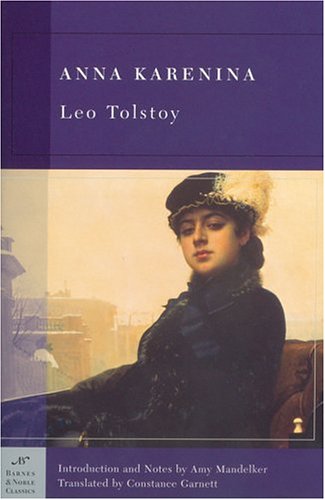
ANNA KARENINA after Five Years...

...
"Happy families are all alike; every unhappy family is unhappy in its own way."
Ilya Efimovich Repin's (1844 - 1930) painting: A Portrait of Tolstoy


I read Anna Karenina five years ago for a book report. I just wanted to read it again. Upon reading the first sentence: Happy families are all alike; every unhappy family is unhappy in its own way", i remember the feeling of psychedelia, a flash of wave that broke me half: two souls, the life I am leading and the frivolous life that i am trying to put away. It reminds me that there are two kinds of writers. Such is a writer that grows from everything, and such is a writer that condemns growth and relieves himself that he, a vehicle of expression, is the measure of everything that he creates.

Reading Tolstoy is incredibly difficult for a fifteen year old that I was. With no advance lessons on syntagmatics and syntactics, or even a notion of translating a piece of literature from language to language, I scuttle over Anna Karenina like as if it was a literature of meditative trance, a long hum of bees continuously uncovering itself upon me day by day. Upon reaching page 365, i stopped and reflected on what i have achieved, half of Anna Karenina was in me, and i stopped there, and i would dare to open the book again after five years to completely take it in.

I choose to grow.

Ciao!
--- o ----


My copy is from the old translation by Constance Garnett (above)

--- o ---
***


No Skin Off My Ass (1991)

... or should i invest for this film?


No Skin Off My Ass by Bruce Labruce


I am busy like any normal person in the campus. It is midterms at U.P. and everyone looks stressed like me with big black eyebags ready to shut off anytime. As suppose to films, I am concentrating my attention on two aspects: French Films from Poetic Realism period (1930 - 1939), mostly that of Renoir and Carne, and the New Queer Cinema for my written personal report on my sexuality subject, Soc Sci 3. Historically, I see how much Bruce Labruce's first feature No Skin Off My Ass can be important to this wave of independent filmmaking in the 1990s. I am trying to connect foreign influences like Gus Van Sant's My Own Private Idaho (1991), James Cameron Mitchell's Short Bus (2006), Todd Hayne's I'm Not There (2007), and Gregg Araki's Mysterious Skin (2004) to the whole body of Queer cinema prevalant in the local independent circuit. I have not chosen any local titles yet, but i have several titles in my mind right now: Pagdadalaga ni Maximo Oliveros (Aureus Solito, 2005), Lihim ni Antonio (Joselito Altejeros, 2008), Lalake sa Parola (Joselito Altejeros, 2007), Serbis (Brillante Mendoza, 2008), Masahista (Brillante Mendoza, 2005). Anyway, you can catch some of this local films in a local film blog, The Bakla Review.

My analysis would run like this:

Contemporary ---> (1900s - 2000s)

(1) Historical Data source related to the construction of the films
(2) Contemporary Gay Sex history: extract parallelisms to no. 1
(3) Extracts from contemporary film books, literature, and criticisms on the films notably from Richard Dreyer, the Ladlad Series, and other 'monumental works'
(4) Exposition for the main thesis: "....." (I won't tell you!)
(5) Conclusion


Okay, I stop here!

Ciao!


****

Samba Saravah...

... is the song to sing about...


Samba Saravah
sang by Francis Lai in Un Homme
also recently by Stacey Kent
[lyrics from]

Être heureux, c’est plus ou moins ce qu’on cherche
J’aime rire, chanter et je n’empêche
Pas les gens qui sont bien d’être joyeux
Pourtant s’il est une samba sans tristesse
C’est un vin qui ne donne pas l’ivresse
Un vin qui ne donne pas l’ivresse, non
Ce n’est pas la samba que je veux

J’en connais que la chanson incommode
D’autres pour qui ce n’est rien qu’une mode
D’autres qui en profitent sans l’aimer
Moi je l’aime et j’ai parcouru le monde
En cherchant ses racines vagabondes
Aujourd’hui pour trouver les plus profondes
C’est la samba-chanson qu’il faut chanter

On m’a dit qu’elle venait de Bahia
Qu’elle doit son rythme et sa poésie à
Des siècles de danse et de douleur
Mais quels que soient les sentiments qu’elle exprime
Elle est blanche de formes et de rimes
Blanche de formes et de rimes
Elle est nègre, bien nègre, dans son cœur
Mais quelque soit le sentiment qu’elle exprime
Elle est blanche de formes et de rimes
Blanche de formes et de rimes
Elle est nègre, bien nègre, dans son cœur

A piece from Claude Lelouch's "to fall in love" Un Homme et Une Femme (1966).

Ciao!

***

On Not Watching...

...Francesco Rosi's Christ Stopped at Eboli (1979)


First notable frame from Christ Stopped at Eboli.


I just had a gathering day. It is one of the rare days where i meet people and people remind me of how trivial and boring my life was. Sometimes they offer you advice and sometimes they just dump you on a sidewalk. What happened to me yesterday was the usual --- friends, a violent reaction, then dump. Right then and there. But i realized, most of these people are the ones who I have been with for years and perhaps, maybe they were right. But how sure am I?

It is not their issue but my issue, and perhaps, I have to reevaluate what i used to call 'myself'. How am i supposed to say this correctly? I just sat in front of my laptop and sulk at the screen. I was supposed to continue two AVPs and a poster design but my mood is way down. I desperately needed to watch a four-hour with a heavy subject to remind myself that i am not alone. What can be more appropriate than Francesco Rosi's Christ Stopped at Eboli (1979) a rich epic tale but really depressing.

On a second thought, why should i be sulking? Have I lost all my spirit? So what i did was I put up a cup of coffee, put in Sex and the City and enjoyed about three to four episodes. I had a new spirit right then and there.

LESSON: When you need to lighten up yourself, you do not need a three to four-hour film. A sex comedy can brighten you up.

Ciao!
***

Versus 2: Design Changes

graphic artwork explosion in Manila for a better world...
...this August...

[main website]

[image source]
[video source]


a motion Design by Acidhouse

Let there be light in August. Like many emerging art, i find graphic art totally exciting and exhilarating, for one reason: I am part of it. Well, i have to admit that given all my tasks to 1) Design the NSCM (National Science Club Month) Brochure, 2) Design Tarpaulins for specific events, 3) Design for AVPs for the whole NSCM, i am basically part of the graphic design junkees who work during late nights, with a cup of coffee, and couple of sketches floating around the room. I am not much of a graphic artist, but i know what graphic art is: it is what you see---a blog. Graphic Design is very crucial nowadays especially in advertising. It has become a new media for communication, and also, for the lack of a verbose expression, an emerging venue for self-expression.

The Designism Art movement
[LINK HERE]Versus II is an art advocacy, in essence, a venue for promoting the arts. As with the purpose of this blog to put art movements central to its discussions, Versus II is certainly part of the Designism movement which was formed by Milton Glaser in 2006, about four years ago. The Designism art movement is in its infancy. And i would always recall what my PSYSC friends discussed a while ago over lunch about logos.

As we all know logos (i assume everyone has seen a logo in their lifetime) is a form of graphic art. Kim, who enrolled English 30 (a GE subject in UP focusing on or anything related to job hunting), told us a trivia that most of the companies today preferred a personal logo in a resume, the one that reflects yourself. I was utterly shocked by this information. It is as if i am a product for sale and that my saleability depends on how good my logo is. This concept of logo-defined-oneself is a direct manifestation of a consumerist society that you and me are part today. Every product has its own logo or characteristic that separates them from the rest.

Designism originates from this consumerist notion of society. The Art Directors Club wanted to exploit this idea. With Malton Glaser forging a new frontier in design media, designism promotes graphic design for 'social intent to create a better world.' It is a radical approach, and with only three years in its existence, designism surely is one of the most exciting art movement of the 21st century.

-----

VERSUS II

[i got this from]

What: Versus II: Design Change - An Artvocacy Exhibit

Who: From Independent to well-known contemporary artists and studios namely: 27+20 / Robert Alejandro / The Acid House / Electrolychee / Dan Matutina / Darkbulb / EveryWhereWeShoot (EWWS) / Inodoro / Erickson Enriquez / Ge Madriaga-Mapa / Christian San Jose / Mike Sicam / Springboard / Studio Dialogo / Team Manila / Vgrafiks Design + Consultancy Agency will be there.

When: August 13 - September 4, 2009

Where: Alliance Française de Manille, 209 Nicanor Garcia Street, Bel-Air II, Makati City.

Why: From their site:
"Giving form to intent, artworks created for the exhibit will be inspired by the United Nations’ eight Millennium Development Goals (MDG). These goals– “which range from halving extreme poverty to halting the spread of HIV/AIDS and providing universal primary education, all by the target date of 2015 – form a blueprint agreed to by all the world’s countries and all the world’s leading development institutions. They have galvanized unprecedented efforts to meet the needs of the world’s poorest.”"
Project Versus is part of the Designism movement. With its similar objective from Designism, it has become a local venue for graphic artists 'to present a body of work that represents their ever-evolving craft, alongside stalwarts whom we've always looked up to even before the computer became an indispensable design tool, and young bloods who continue to push the boundaries of graphic design.' (here)

This August, Versus II will held their exhibit for the benefit of two NGOs: The Outlook Pointee Foundation and The Farm Projects. If you are artistic enough, visit Alliance Francaise de Manille on August 13, 2009 at 8PM. I think it is invitational, but hey, let us support this advocacy and be part of Designism.


UN HOMME ET UNE FEMME (1966)

everyone wants to fall in love with cinema...


Un Homme (a Man)


Une Femme (a woman)

Indeed, everyone wants to fall in love with cinema as much as everyone wants to fall in love with Claude Lelouch Un Homme et Une Femme. It is a rare case of paranoia, when, after watching Un Homme, i wanted to laugh all night because it is a sort of movie that i would not just give in to. I sense a displacement in all sorts of romance, because i believe, and thoroughly believe that romance is quite idealize and often results to false comfort. Another thing is, not everyone, not even you my dear reader, can afford to fall in love in a Shakespearean or Baudelairean sense. Charles Baudelaire's famous words:
"There is an invincible taste for prostitution in the heart of man, from which comes his horror of solitude. He wants to be 'two'. The man of genius wants to be 'one'... It is this horror of solitude, the need to lose oneself in the external flesh, that man nobly calls 'the need to love'."
reflect a sort of avaricious and capricious form of love, which smells like a faint fart from a dog. Claude Lelouch presented a Shakespearean-Baudelairean love, the 'one' becoming a 'two', and he created one of the most amazing piece of film making yet the most excruciating form.

In cinema, there are three types of audiences:

(1) Technical/'Objective' - an audience who exemplifies somewhat a similar role as that of a scholar whose only reason for believing in cinema is its form.

(2) Impressionistic/Emotional - a type of audience whose judgments are based on what one feels about a particular filmic/cinematic effects.

(3) Non-Impressionistic-Non-Technical - A sort of audience who watch a film just for the sake of it.

Certainly, these categories prompt a certain genre of films to watch i.e. technical audiences usually watch art films. However, it should not be taken that this invented list may arise to a stratification of each. It should not be taken that each one exist in isolation with the other. An audience may comprise both Technical and Impressionistic type and even the third category, it highly depends on the concentration of his interest.

A complete and ideal audience should, i think, accommodate all the three modes of reception. What one makes an ideal audience is his immersion in cinema, of its rich history, of its evolution, of its social and economic influence. An ideal audience must possess a sheer amount of objectivity, and must transcends this objectivity by delving into the unknown i.e. to question the cosmic effect of an spiritual film, or to ask how such a film can generate a movement like any other art, whether political or social in nature.

Cinema is gifted with publicity that it becomes a constitution of the contemporary society and the contemporary human being like you and me.

Claude Lelouch's Un Homme caters to all types of audiences. Its constitution and formation comes from a very simple narrative, but its effects is transformational, unique and raw. Spontaneity, whatever it means, and the effect of spontaneity defines Un Homme. It is a sort of film that requires a belief in flux, or how things change, and a belief in destiny, or how things will come. This belief system is central to the undestanding of Un Homme, and with this framework the rest follows.

Un Homme reminds me of Wong Kar-Wai's Happy Together (1997), maybe because it uses the same technique: the coloration-discoloration method. However, i derive this analogy because the two of them comes from the Cinema of Feeling. A cinema whose filmic effect and style trancends normative filmmaking, and the primary function of its stylistic bravura is to define and transform the six basic emotions of a human being. The transformation is usually complex. In Un Homme, the transformation is as complex as that of Wong Kar-Wai. We suddenly feel this uncertainty. A smile does not directly indicate happiness, it often asks a question, what sort of happiness does it mean?


When Un Homme won Grand Prix (equivalent of Palme d' Or) in Cannes FF 1966 it welcomes France to the world.


Claude Lelouch
shares his creative process
in making films.

From Beet TV:
"He has little use for the Internet as a means of discovery, preferring to witness life first-hand. He travels widely by himself with a small tape recorder to tape his thoughts. " (link)


Ciao!

****


Essential Links from the Film Blogosphere

a precious find

[pic from peter]


Woman on the Beach (Hong Sang-soo, 2006)


As for everyone who wishes to explore every aspect of a film blog, this is not a raw source of information that i can give you but i may at least provide you where and when the most critical discussion of films, film theory and criticism occur. For as we know, the film blogosphere have become a monster and gobbled up most of the film magazines in print today where critical studies of cinema used to promulgate. For about 9 years, the web has accommodated most of the critical discussions and has put up its own centers for excellent writing notably Senses of Cinema, CinemaScope, GreenCine Daily, Bright Lights, Criticine and Jump Cut. This is a revolution that brought critics, cinephiles (like this one), and even film theorist to give rise to a new brand of criticsm (which is still questionable?) in film.

What i have learned for past two weeks about the dynamics of film blogs comes from a very simple question: How do cinephiles move the film blogosphere?

1) BREAKING THE ICE (Girish's July 13 post)

What i find really exciting about the film blogosphere is when one post could generate such an amount of film people (critics, theorists, Marxist-socialist-thinkers, cinephiles, and of course, ordinary readers who are drawn by the girish's charm) to concentrate on one aspect: Film criticism.

Girish is highly inspiring, I am a big fan of his blog. I identify myself in him on many aspects. He is a management professor at Canisius College, and do film blogging as his means to express his love for cinema. In his July 13 blog, it has gained enough attention from known critics like Jonathan Rosenbaum, Adrian Martin, Jim Emerson and the ever eponymous HarryTuttle to evaluate the field they are engaged with. Ebert, it think, isn't updated in all these frantic over film criticism.

Girish's July 13th post generated up to 110 comments, and still growing, from its readers. I admire how it collected an active audience who is a bit more critical in all aspects of criticism: from the rubric of film criticism to the grammar mistakes committed by film magazine editors. Girish's blog, before i forget, is about the concern for establishing a viable link between film critics and film scholars with regards to their mode of writing on films. This is his response to a contemporary published essay by James Elkins entitled "What Happened to Art Criticism?" (2003) that "surveys the last 50 years of the field." "Elkins calls for a new and alternative kind of art criticism that is both (1) deeply aware of art history and thought about art; and (2) is unafraid to evaluate, pass judgment, and be polemical." Girish, like everyone who is deeply involved with the discourse of cinema, evalutes the current status of film criticism and scholarship. He observed:

"Elkins makes an important and troubling observation: the two fields of art criticism and art history hardly ever cite each other. Art historians writing in journals like Art Bulletin, October or Art History almost never refer to art critics who write in contemporary art magazines or newspapers. And similarly, art critics, while focusing on individual artworks and often rendering close, detailed descriptions of them, are either unwilling or unable to invoke the work of art history scholars both contemporary and past, even though it would undoubtedly help deepen their reflections if they did.

"I see some parallels of Elkins' critique in the fields of film criticism and film scholarship. Except for a small number of invaluable critic-scholars who work to bridge the gap, the two groups similarly shy away from citing each other. Why is this so? For critics, it would require the significant effort of familiarizing themselves with scholarly literature past and present, an effort made more difficult by the presence of a specialized scholarly vocabulary. For scholars, whose jobs already require them to do vast amounts of reading, this would mean widening their field of vision to include writing in film magazines, the Internet (including blogs), and newspapers. Added to this are the demands in both professions of watching scores of films on a steady basis."
This, in essence, broke the ice between two opposing schools of thought revolving around criticism. It has raised a lot of questions. Such is from Adrian Martin's response:
"Here is a very practical question that goes right to the heart of our discussion! I am currently teaching some Chinese exchange students whose first language is not English. In my 'Contemporary Theory and Criticism' course (from 1975 until now), they find virtually all the readings incomprehensible. So: what is the textbook that explains in the simplest possible linguistic terms (and style) the panoply of contemporary film theories? I am serious, my future as a teacher depends on it!" (permalink)
The 'arcane' language of film theory and its limitation for translation to encompass a wider audience especially those who are non-French (Bazin's writings) and non-English (the rest of it) in favor of the Chinese and Japanese whose language is immutably the most complex form of all, if one can exclude more archaic languages such as string theory and high-energy physics.

The post also opened to another question on the quality of writing in film. There is such a thing as a categorical dispute between 'impressionistic' writing and purely 'hermetically sealed' and arcane language of film criticism. This discussion is somewhat opened by the first comment by Jim Morison when he mentioned:
"What we need, in my opinion, are more scholars like David Bordwell who know cinema history and theory, and who are also interested in actually communicating their ideas! That is, they know how to write in respectable English, rather than an airless, encoded academese that, in its own hermetically sealed way, is as hostile to the language as anything perpetrated by George W. Bush or Sarah Palin." (permalink)
It mentions David Bordwell, my favorite film scholar whose volume of writing became my religion, and his method of approach central to my blog. Anyway, this concern about the divide on 'impressionistic' writing, or the writing of one's feeling on a film, which uses a highly lyrical exposition style where the strength of critic's remark is weighed generally on the synthesis of his arguments and its appeal to the mass audience, over academic writing, or the writing of one's analysis of filmic form, its significance, its context and history, and its elusive effect to audience, is again brought up in full force by another comment by Corey Creekmur:
"I'm sorry the very interesting discussion Girish has started has focused largely on the to me rather tedious emphasis (now decades old and apparently endless) on jargon and bad writing. I know why people care about those things, but as many have pointed out, complaints about "specialized vocabulary" in musicology, physics, or medical research never seem to bother anyone -- it's just the presumption that the humanities should be defined by "clarity" that continues to lead people to decry "bad writing," more often criticized than demonstrated. (I notice few examples have been provided here.) I assume the notion that cinema is a "democratic" art, available to all, also continues to raise suspicion about those who approach it professionally, though we expect many other scholars to study their topics with the tools of their trades." (permalink)
Corey somewhat wanted to make a shift from this notion of bad writing versus good writing. But the conversation still continued on the unification of this great divide (if 'great' isn't such a big word), Harry Tuttle makes a synthesis:

"Re-use and adaptation" is typical to academic work, I doubt film journalists are worried about this aspect. If scholars are distraught by impressionistic reviews just because they are unable to fit them in their theoretical models, it doesn't mean that this type of contribution should be discouraged in film culture for the rest of us.

The "regular diet" comment is also exclusive and insular. I bet regular cinephiles find academic writing too heavy for a regular dinner. It's always a question of perspective, especially in a larger conversation including all sorts of readers and writers.

P.S. How ironic to be lectured about the smell of literary writing by a linguist with a questionable spelling. If foreigners are welcome to this "large conversation" (which is to me as vital as to compose with journalists and academics), English writers in the comfort of their primary language should show the humble understanding to overlook literary perfection as a criterion for quality thinking." (permalink)
If one can digest all the, so far, 110 comments revolving around these main points, well, just pop out a comment below.

2) THE FEUD: IN SUMMARY (Harry's Response to Girish July 13th)

Girish's "Building a Large Conversation" brought an ample amount of response from the commentators. One of the response is Chris Cagle in his Category D blog where he raised a few questions:

"What of the field as a whole? My generalizations:

- Scholars of Hollywood (and of British cinema) tend to be more populist than area scholars studying prestige national cinemas. There are signs this is changing, with recent conferences and books on European popular cinema, but even still studies of popular French or German films, say, seem thin on the ground.

- The field embraces low culture as well as high culture, but rarely the middle.

- On one hand, cultural studies has left its mark in the field as a whole, pushing it in a populist direction. On the other hand, the move it is often at the price of a full aesthetic understanding of popular cinema.

- What I call the New Theoretical Turn in film studies has reacted not only against historicism but also against cultural studies. As such, it has embraced noticeably more canonical objects of study and with them a more canonical attitude. To take one example, when Tom Conley seeks to understand a cartographic discourse in Cartographic Cinema, his first examples of recourse are Casablanca and The 400 Blows. He certainly reads these differently than auteurists would but does not submit them to an objectifying analysis. Nor does he ever entertain the possibility that one might need to find a more typical film to establish a broad discourse." (link)
Harry Tuttle, on the other hand, made somewhat a categorical response to Girish's post. He collected some quotes from books and journals, and also some web links categorize into (1) Journalistic criticism, (2) Essayistic criticism and (3) Academic criticism. I find the one he quoted from La Critique de Cinéma, by René Prédal, 2004 quite elusive. It primarily distinguishes the two approach: the Journalistic Approach and the Academic Approach. It primarily puts two persona (film critic and a film scholar) in conflict in most aspects like:

language (cliches vs. jargon),
proof (burden of proof vs. Evidence in methodology),
length of article (short article vs long erudite essay),
type of discourse (Judgement vs. Understanding),
and other aspects. A direct to the point categories which in way produces somewhat a gap between the two.

2) BUILDING A MOVEMENT (Harry's call for Unification July 20th)


Seven days after Girish's post, Harry Tuttle wanted to unify all art film blogs existing in the web today. He echoed:
"I dream of a blogosphere we could navigate to meet film lovers from any imaginable country, and be able to read their thoughts on cinema, in their own language, or translated (one way or the other)." (link)
This is a call for a movement, for a unification, everyone should join this endeavor. Harry recently made an initial compilation of art film bloggers. Click here to access his post. I am surprised that there are only six from the Philippines. Asan na yung iba?

Thanks Harry for including my blog! Wee!

Filipino art film bloggers, tinatawagan ko kayo na sumali at makialam proyetong eto ni Harry Tuttle. Isa itong proyeto tungo sa pagkakaisa natin, kasama ang ibang blogger mula sa ibang bansa upang wakasan ang consepto ng 'locale' o pagkakaroon ng eksklusibong pagkukumpol-kumpol ng diskurso sa pelikula at sine ng bawat kani-kanyang linggwahe. Nagdudulot ito ng stratification ng ideya dahil sa pagkakaiba ng linggwahe at kultura. Wakasan ang 'locale' and maging parte ng Kulturang Global sa Internet sa pamamagitan ng pagsali dito. Maaring mag-send ng link ng iyonh blog sa kanya sa pamamagitan ng e-mail (harrytuttle.screenville@gmail.com) or pwede na ding imungkahi sa kanyang comment page.

"If you are a film lover, a film writer, a film critic, a film student, a film scholar, a filmmaker from non-English speaking nations or if you know someone, if you know places where to find them, if you can read these local languages, please join in on this quest to connect cinephiles around the world and gather around the same table." (link)
Be part of this event.

Ciao!

***

Something personal: I recently devoted myself to an exclusive non-meat diet which i have succesfully proposed two weeks ago to myself. most of close friends know this. i am undergoing some check-up for a medical condition i cannot understand. Bear with me as i update my personal progress in this rather impersonal space.

***

xoxo

BREAKING NEWS! - Step Aside Film, say hello to Gloria!

[video cued from BB]


"To get the razor look... you get like 3 gallons of hairspray,
don't you even worry about, what is it called, the ozone layers.
They have at least 50 more layers left for like the earth to
freeze over and explode..."
WTF!


Everybody gets lost in the internet nowadays. it's one hell of a jungle out there! Upon hitting BB's page, i just have to play this make-up tutorial video. Gloria gave me the best laugh this week!!! and it involves the big F! word... Well, I DO LOVE GLORIA... She's so adorable! How i remember my girl best friend in her, they are like twins...


I would love my girlfriend to look like this!
F! F! F!

I love Gloria!

***


66th VENICE FILM FESTIVAL LINE UP is here!

so what about it?

[pic from here]


Variety has a pretty good take on the list here which was released July 30. The festival website is here in English. The film festival will run from September 2 to 14, 2009.

"Everybody thought that the writers' strike and the economic crisis had created a stall in American cinema; instead this year, like never before, we found such ample offerings coming from the U.S.; both from established directors like Steven Soderbergh and first-timers like Tom Ford," Mueller said at a packed press conference in Rome's Excelsior Hotel on the Via Veneto." (from Variety.)

The Gist:

Well, Engkwentro (Pepe Diokno, 2009) which was shortlisted in this 2009 Cinemalaya got a Horizons Premiere at the prestigious Venice Film Festival this year. And i am quite shock that the film The Single Man will be the first directorial debut of the fashion legend Tom Ford who was once the creative director of Gucci (now owns his own line of clothing, Tom Ford). Everyone know what Gucci is so no need to explain. The French New Wave director Jacques Rivette will have his premier of 36 vues du Pic Saint-Loup (36 Views from the Pic Saint-Loup) at the festival also. Giuseppe Tornatore will be there with his Baaria and Claire Denis with White Material. George Romero, one of my favorite director in the horror genre, will have his Survival of the Dead premier there. Werner Herzog and Michael Moore.

Who will win this year's the Leone d'or (Golden Lion)?

The list: (from Variety)


66TH ANNUAL VENICE FILM FESTIVAL LINEUP COMPETITION

"36 vues du Pic Saint Loup," Jacques Rivette (France)
"Accident," Cheang Pou-Soi (China-Hong Kong)
"Baaria," Giuseppe Tornatore (Italy) - Opening Film
"Bad Lieutenant: Port of Call New Orleans," Werner Herzog (U.S.)
"Between Two Worlds," Vimukthi Jayasundara (Sri Lanka)
"Capitalism: A Love Story," Michael Moore (U.S.)
"La doppia ora," Giuseppe Capotondi (Italy)
"Il grande sogno," Michele Placido (Italy)
"Lebanon," Samuel Maoz (Israel)
"Life During Wartime," Todd Solondz (U.S.)
"Lo spazio bianco," Francesca Comencini (Italy)
"Lourdes," Jessica Hausner (Austria)
"Mr. Nobody," Jaco van Dormael (France)
"Persecution," Patrice Chereau (France)
"Prince of Tears," Yonfan (Hong Kong)
"The Road," John Hillcoat (U.S.)
"A Single Man," Tom Ford (U.S.)
"Soul Kitchen," Fatih Akin (Germany)
"Survival of the Dead," George Romero (U.S.)
"Tetsuo the Bullet Man," Shinya Tsukamoto (Japan)
"The Traveler," Ahmed Maher (Egypt)
"White Material," Claire Denis (France)
"Women Without Men," Shirin Neshat (Germany)


OUT OF COMPETITION

"Anni Luce," Francesco Maselli (Italy)
"Chengdu, I Love You," Fruit Chan, Cui Jian (China) - Closing Film
"The Hole," Joe Dante (U.S.)
"The Informant!," Steven Soderbergh (U.S.)
"The Men Who Stare at Goats," Grant Heslov (U.S.)
"Napoli Napoli Napoli," Abel Ferrara (Italy)
"L'oro di Cuba," Giuliano Montaldo (Italy)
"Prove per una tragedia Siciliana," John Turturro, Roman Paska (Italy)
"REC 2," Jaume Balaguero, Paco Plaza (Spain)
"Scheherazade Tell Me a Story," Yousry Nasrallah (Egypt)
"South of the Border," Oliver Stone (U.S.)
"Yona Yona Penguin," Rintaro (Japan)


MIDNIGHT MOVIES


"Gulaal," Anurag Kashyap (India)
"Dev D," Anurag Kashyap (India)
"Brooklyn's Finest," Antoine Fuqua (U.S.)
"Delhi-6," Rakeysh O. Mehra (India)
"Valhalla Rising," Nicolas Winding Refn (Denmark)

GOLDEN LION FOR LIFETIME ACHIEVEMENT


JOHN LASSETER AND THE DISNEY/PIXAR DIRECTORS
"Toy Story 3-D" (New Version), John Lasseter (U.S.)
"Toy Story 2-D" (New Version), John Lasseter, Lee Unkrich, Ash Brannon (U.S.)


HORIZONS


"Francesca," Bobby Paunescu (Romania) - Opening Film
"One-Zero," Kamla Abou Zekri (Egypt)
"Buried Secrets," Raja Amari (Tunisia)
"Tender Parasites," Christian Becker and Oliver Schwabe (Germany)
"Adrift," Bui Thac Chuyen (Vietnam)
"Crush," Petr Buslov, Aleksei German Jr., Borisd Khlebnikov, Kirill Serebrennikov, Ivan Vrypayev (Russia)
"Repo Chick," Alex Cox (U.K.)
"Engkwentro," Pepe Diokno (Philippines)
"The Man's Woman and Other Stories," Amit Dutta (India)
"Paraiso," Hector Galvez (Peru)
"Io sono l'amore," Luca Guadagnino (Italy)
"Cow," Guan Hu (China)
"Judge," Liu Jie (China)
"Pepperminta," Pipilotti Rist (Switzerland)
"Tris di donne e abiti nunziali," Martina Gedeck (Italy)
"Insolacao," Daniela Thomas and Felipe Hirsch (Brazil)
"1428," Du Haibin (China)
"I Travel Because I Have to, I Come Back Because I Love You," Marcelo Gomes and Karim Ainouz (Brazil)
"Once Upon a Time Proletarian: 12 Tales of a Country," Guo Xiaolu (China)
"Villalobos," Romuald Karmakar (Germany)
"Il colore delle parole," Marco Simon Puccioni (Italy)
"The One All Alone," Frank Scheffer (The Netherlands)
"Toto," Peter Schreiner (Austria)

HORIZONS EVENTS


PROGRAM 1
"The Death of Pentheus," Philip Haas (U.S.)
"Faces of Soul," Gina Kim (U.S.)
"La Boheme," Werner Herzog (U.K.)
"Mudanza," Pere Portabella (Spain)


PROGRAM 2
"Deserto rosa - Luigi Ghirri," Elisabetta Sgarbi (Italy)
"Reading Book of Blockade," Aleksander Sokurov (Russia)
"Armando testa - povero ma moderno," Pappi Corsicato
"La danse - Le Ballet de l'Opera de Paris," Fredrick Wiseman (U.S.)
"Hugo en Afrique," Stefano Knuchel (Switzerland)
"Via della croce," Serena Nono (Italy)

CONTROCAMPO ITALIANO
"Poeti," Toni D'Angelo
"Negli occhi," Francesco del Grosso
"Il compleanno," Daniele Anzellotti, Marco Filiberti
"Dieci inverni," Valerio Mieli
"Cosmonauta," Susanna Nicchiarelli
"Hollywood sul Tevere," Marco Spagnoli
"Il piccolo," Maurizio Zaccaro

CONTROCAMPO ITALIANO EVENTS
"Giuseppe De Santis," Carlo Lizzani

CONTROCAMPO/RETROSPECTIVE EVENTS
"Lola," Giulio Questi
"Hotel Courbet," Tinto Brass


Anyway, i have so many thing to do. See you in the next few days...

Ciao Guys!

***

How high giants grow?

THE SAD NEWS...


The Philippines:

We have crossed the threshold of our own history. Written in the palm of this woman, who "knew nothing", is a freedom that we still question today. Look at what we have, as people of this nation, a woman who have lost her life but save millions from the gratuitous insolence of that dark history of our lives. I am speaking not as an individual of sheer indifference but as a collective soul, who believes in faith and, above all, love. Today is August the first. We shed tears because of her death, emptiness looms over board, and we recall once again that unfolding in our history the moment when: in 1986, people crossed the streets over EDSA Ave. in Manila, with a pack of prayers and yellow ribbon. They wanted to free their nation. And they did. But somehow, years seemed to toll behind and the quest for freedom is still there. What then constitute a free state? I guess to answer this question without theory, the archaic language of Politics and Governance that have spurred the minds of thinkers and philosophers throughout our short human history, would require enough courage as that of a battalion of soldiers forging an unknown territory. It places oneself in a zone of fear, and one can unravel with a jolt if not eased. This is what Corazon Aquino faced when she was elected as the President of the Republic of the Philippines last 1986. And this is what i have known so far from my Kasaysayan lectures during my elementary years about the fate of my country more two decades ago. I realized how frail my own sentiments were at that time, and how impossibly numb i was as a young teenager. What concerns me, during Ma'am Chona's, my history teacher, lecture on the revolt of 1986, is nothing but the expectation of a pop quiz that she would give minutes later. I saw Ma'am Chona like a giant, a life force piercing through our young soul, enlivening our fragile little conscience with a solid story from our history. Along with many criticisms and prejudices in her lectures, she still put a central figure for emphasis: Corazon Aquino who stood not just a President of our nation but a symbol of hope, freedom and democracy. But look at what we have now, a symbol of life in her deathbed. What does it mean? What has become of our nation's freedom that embodies her? Have our freedom become stale and unclear? How free am I? What constitute my freedom? Questions after questions after questions, we suddenly become vacuous and meaningless yet we recover from this shocked day by day, through our constant prayers and hope that someday we come together and free ourselves from these endless agony of insecurities, imperfections, and repressions that our nation have truly incurred through the years of silence. I have to clamor this from my heart, though Corazon Aquino is not a perfect president, she has truly become a meaningful part of our lives, an inspiration to rebuild a fallen government after the Marcos regime.

Perhaps, I have become a monster and blamed her for giving headaches to landowners upon passing Republic Act No. 6657, also known as "The Comprehensive Agrarian Reform". Or to call her government the most unstable during the military insurrections for the first three years of her term. But these issues have lost their meanings in time.

We face new era.

She was such a giant, a woman who became a president, who knew only one thing: to change a nation in peace.


How high giants grow?

"The more you look at it, particularly in light of recent events, the more you see the awesome differences between Corazon Aquino and Gloria Macapagal-Arroyo. At first blush, they have similarities too, which are that they are both women and the product of People Power. But at second blush, even those similarities are differences."

- Condrado de Quiros (here)


***
Essential Links:

Kimboi's "Yellow" post.
CoryAquino.ph
Condrado de Quiros' "Difference" article in PDI (July 21, 2009)
Michale Tan's "Tita, Ate, Madam" article in PDI (July 10, 2009)

Video Supplement: From Ninoy Aquino TV


First part of President Cory Aquino's
Historic speech before the U.S. Congress

part 2
part 3

Ciao Cory!

***


BREAKFAST AT TIFFANY'S (1961): Oh.. Cat! Oh.. Cat!

how i love Tiffany's...

[quotes from script from...]


Everybody drools over Blake Edward's Breakfast at Tiffany's (1961) because everybody loves it. I am everybody. And with a sheer amount of joy, after 20 years of existence, i would say that i have never seen such an opening as Holly Golightly (Audrey Hepburn) walking out of a cab...


in long shot...


then a low-angle shot...


and booom! There is Audrey Hepburn's name screaming
in the frame...
and she walks like a doll towards that window
because her dress is too tight...


and boom again! "in BREAKFAST AT TIFFANY's" flashed all over
the screen... and she literally had breakfast, with coffee and
some bun, at Tiffany's...


I thought the movie would end there but no...


And she continued eating her breakfast and...


yes, it was based on the novel by TRUMAN CAPOTE...

Yes, it's Truman Capote and Marilyn dancing...


No wonder why Paul Varjak, played by George Peppard,
get so naked here because everyone knows
how Capote likes the idea... (no offense)


and Audrey Hepburn sings 'Moon River' and the film
won Oscar Award for Best Song

Everybody should not forget Mr. Yunioshi in
his promising performance...

Before I plunge again into La Grande Illusion (1937), i have to acknowledge this movie that save it all. So what more can i say? Well, Breakfast is absolutely gorgeous and chic, typical mainstream film from Hollywood in the 1960s. I have always love Breakfast for being so stylish in everything, and i have never seen Manhattan so bright and shinny. Oh how i love New York!

I do love New York.

And when this final scene came, i totally fell of my chair...


Introducing the TOUGH GUY --- the nameless, poor cat!
"Holly: STOP THE CAB. WHAT DO YOU THINK? THIS OUGHT TO BE THE RIGHT PLACE FOR A TOUGH GUY LIKE YOU-- GARBAGE CANS, RATS GALORE.

Cat: [MEOW]

Holly: SCRAM! I SAID TAKE OFF! BEAT IT! LET'S GO.

Sky: [THUNDER]"
honestly i love cats.


"PAUL: DRIVER... PULL OVER HERE. YOU KNOW WHAT'S WRONG WITH YOU, MISS WHOEVER-YOU-ARE? YOU'RE CHICKEN. YOU GOT NO GUTS. YOU'RE AFRAID TO SAY, "O.K., LIFE'S A FACT." PEOPLE DO FALL IN LOVE. PEOPLE DO BELONG TO EACH OTHER, BECAUSE THAT'S THE ONLY CHANCE ANYBODY'S GOT FOR REAL HAPPINESS. YOU CALL YOURSELF A FREE SPIRIT, A WILD THING. YOU'RE TERRIFIED SOMEBODY'S GOING TO STICK YOU IN A CAGE. WELL, BABY, YOU'RE ALREADY IN THAT CAGE. YOU BUILT IT YOURSELF. AND IT'S NOT BOUNDED BY TULIP, TEXAS, OR SOMALILAND. IT'S WHEREVER YOU GO. BECAUSE NO MATTER WHERE YOU RUN, YOU JUST END UP RUNNING INTO YOURSELF.

HERE. I'VE BEEN CARRYING THIS THING AROUND FOR MONTHS. I DON'T WANT IT ANYMORE."


"Oh! Cat... Oh... Cat!"

And they kiss and zoom out...

and end...


The last scene...


Ciao guys!

***