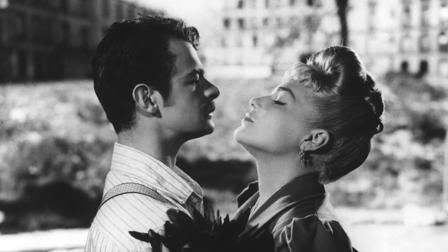
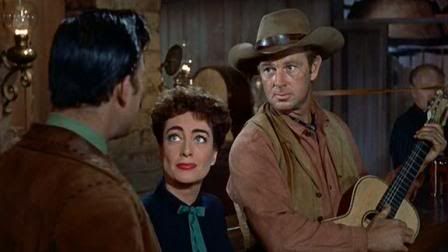
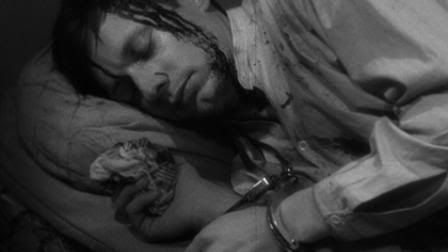
Nostalgia for the Light (2010)

...trailer of the day


Quite an instant eye-candy for a trailer. With some oblique comparisons to Tree of Life (2011), I descended upon a quote by my partner explaining, otherwise, how beautiful this movie is, at least for him. He said:

"Once again, Patricio Guzman does an effective documentary film about his country's continuous agony and suffering that may seem minuscule and insignificant when measured up to the vastness of our universe but that are hugely important to those who have experienced it in the past, these people who also make up the cosmos’ intricate thread of the past, present and future."

---Chris Sta Maria from here


Ciao!
*****

Busong (2011)

...


Busong is one of the few films that break out from the line up of Cinemalaya Independent Film Festival 2011. With a non-linear narrative structure and a catchy stylistic heterogeneity, it transcends from the dominant themes of Philippine cinema placing itself as one of the most important local films about tribal culture. What permeates within the juxtapositions of images and associational elements in the film is this pervading concept of tribal space and time.

Solito's personal reflections on Palawan's history has assimilated within the aesthetics of his film. He uses it to construct the film's unique spatial and temporal unity of Palawan's struggles to reclaim their degrading landscape and to revoke the lost spiritual identity of the region after years of captivity from foreign forces. This pluralistic and personal approach of creating a filmic world is itself a creative achievement in contemporary Philippine cinema. It resurfaces the rarely explored linkage of cinema and tribal history told through a personalize spatio-temporal design. Solito adapts the non-linearity of the oral tradition his of tribal ancestors to his film by fusing it to its editing. He places great importance on this constructional principle that with this, the film can be situated within the discourse of the loob-labas (internal-exteral) system, one of the central discourse in Filipino Psychology, indigenous to the Filipino self.

The film itself is a journey from outside to the inside, from labas to loob. Angkarang carries the badly wounded Punay in a hammock from the outskirts of the beaches of Palawan to its inner mountains in search for a healer of Punay's wounds. This mystical search for the healer drives the narrative of the film. In their journey, they met three locals: Ninita, a woman troubled by her husband ailment from an accident after an Amingus tree fell down on him; a fisherman troubled by the loss of his son after an encounter with an abusive foreiner who claims he owns the island; and Aris, a returning local from the city in search for his roots to fulfill his ancestors' wish to become a shaman. The journey narrates the process of healing of Palawan's destroyed rainforests from environmental degradation in a metaphorical sense. This process is from the outside to the inside.

The foliage of the leaves and the mystical sounds of the forest mimics the internal self of the character, Punay, and her mysterious and elusive role as Palawan herself. The depth of her wounds on her feet and on her skin scarred not only her physicality as a being but also her internal consciousness. As the first healer, a friend of Ninita who also tried to heal her husband, fails to heal Punay, the fisherman acts as a precursor, linking the first healer to the final healer, Aris. In Ninita's story of the fate of her husband Tony, the manifestation of the 'dark force' responsible for the metaphorical wounds of Punay appeared covertly via the juxtaposition of chainsaw to Tony's body during his healing with the first healer. It is with the fisherman that the 'dark force' appeared in a full physical form via the foreigner threatening the fisherman and his son to leave the island. These covert and overt display of opposing forces provide a sharp critique to the locals who continuously destroy the forest of Palawan and to the US's responsibility in the territorial struggle with the local people, and also the hypocrisy of those local guardians who follow the US in abusing Palawan's tribal riches.

The interaction between the physicality and non-physicality of nature in Busong acts as a building force at the end of the film. As the film reaches its climax, symbols became intensified and superimposed. The film ends with Punay successfully healed with butterflies emerging from the surface of her wounds. The symbolism becomes apparent: rebirth from within oneself.

Within the eternal verite of Busong a message purports to tell that: situated inside the forces of nature lies this naturalistic, non-physical force, busong (literally means karma), that can destroy those who ills Palawan's riches or re-create effortlessly Palawan's beauty. This dualistic nature of busong haunts the film with a self-reflexive force as the film mirrors to our lives this indigenous and personal relationship to the environment.

Ciao!
****

Film Viewing Log: Aug. 1- Aug. 15

...Chris Eriz here


Oxhide
(Liu Jiayin, 2005, China)- 5/5
I was almost fooled by its documentary-like approach, when I realized by the second half of the film that it must be scripted, considering the carefully planned choices of long, static, cramped-up shots for each scene. And my sympathies all go to the father and his dilemma of either sticking it out for his craft, his passion, or giving in to what the public wants. There is also something ambiguously profound in the ending, where they give no answer or response to what the father says in the end.

The Sacrifice (Andrei Tarkovsky, 1975, Soviet Union)- 3.5/5
Utterly beautiful, if not entirely moving, in the way the whole thing is filmed. Because of Tarkovsky’s ease in filming natural elements-- the gentle movements of the curtains, the steps through the mud, the cloth as it starts to catch fire-- and attention to minutiae detail, the way the story unfolds seems to be not that important, considering how we can already guess quite a lot on what will eventually happen from the film’s title.

Egg (Semih Kaplanoğlu, 2007, Turkey)- 3.5/5
It is perhaps not as great as Kaplanoğlu’s later film, Honey, that just perfectly captures the beauty of the rural landscapes through image and sound and the pains and melancholy of childhood. But, perhaps, I’ve just never experienced adulthood yet in order to fully relate with and understand the hero’s brooding over the past and going back to his roots in this film.


La Perle
(Henri d'Ursel, 1929, Belgium)- 4/5
Deliciously fun and erotic. After seeing this, I felt like slickly sauntering around high-class apartments and stealing jewelleries from all the tenants in those tight outfits, just like what I had felt before, subsequent to watching Maggie Cheung portray Irma Vep.

Un Lac (Philippe Grandrieux, 2008, France)- 4/5
Truth be told, while watching it, I kept psychoanalyzing every human relations and interactions in the film even with the father, with his anti-climactic arrival, noticing suggestions of incest between the older brother and sister, and psychological complexes in almost each and every one of them, especially Alexi. But, perhaps, I was using the wrong approach. The filmmaker seems more interested in creating an atmosphere of bleakness living in isolation and capturing the stillness of the scenic snowy landscapes, with his use of non-patterned and uncalculated array of film techniques.

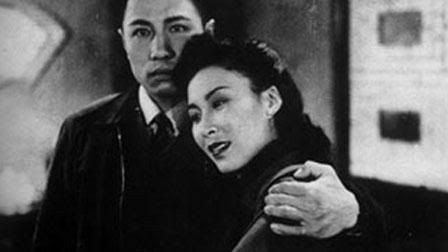
The Ball at the Anjo House (Kozaburo Yoshimura, 1947, Japan)- 4.5/5
Oh, Masayuki Mori was so dreamy then, or maybe I do really have a thing for badass boys. Oh, those smoke rings. Swoon. I don’t think there is anything juicier, for me at least, than the crumbling of an upper-class family, troubled by the loss of all their wealth. Yet in this film, one can’t somehow help but feel for the family and their plight. This is great, juicy family drama stuff, the kind I’ve always expected out of old Hollywood melodrama films that mostly just stooped down to either playing it safe or going way over-the-top. But here, prepare for some drama dealing, with class relations, some “Old money” and “New Money” conflict, and both familial and romantic tensions, all done in a sincere manner. I got my eyes all glued to the screen during the grand finale to the ball.


Nostalgia for the Light
(Patricio Guzmán, 2010, Chile)- 4.5/5
Going into this, I was expecting the film to be an existential search for truth and to have a sense of wonderment about this whole bigger world up there in space. Although it does mention a thing or two about those things, this is not a film wholly interested in and dedicated to the greater scope of things. It is mostly about memory and the past. Society is keen on finding about the origins of us, humankind, our past thousands of years ago, but it would do anything to forget our immediate past, especially ones that reflect badly on what humans are capable of. Once again, Patricio Guzman does an effective documentary film about his country's continuous agony and suffering that may seem minuscule and insignificant when measured up to the vastness of our universe but that are hugely important to those who have experienced it in the past, these people who also make up the cosmos’ intricate thread of the past, present and future.


Bitter Rice
(Giuseppe De Santis, 1949, Italy)- 4/5
Oh, Silvana, Silvana. Her dilemmas, confusion and pain over what she is doing towards her fellow countrywomen, both her conflicting feelings of fascination for wealth and luxury and empathy for her fellow rice workers, and her unpredictable behaviour. And, don’t pretend you didn’t notice her sensuality and beautiful and curvaceous body (and I am not even into women!). These are really what got me engrossed to the whole film, as I wait for her next unpredictable move even though, by the second half, we can sadly guess what her fate will be. That, and the depiction of the minor characters too, the genuine working-class women who work their asses off for this seasonal work and who only occasionally have their moments of triumph and joy.

The Party and the Guests (Jan Němec, 1966, Czechoslovakia)- 4/5
It’s hard not to think of the whole film as a political allegory, considering how the party occurs in a forest, isolated away from any real resemblance of a regime or government. And it’s horrifying to think how charismatic the birthday man and his son were, how they charmingly convinced the guests that the son abducting them was just a mere game of tomfoolery, his own idea of a game.

Harry Potter and the Deathly Hallows: Part 1 (David Yates, 2010, U.K.)- 2/5
I cried, a few shots even before the moment of Dobby’s death. It was not because of the film’s execution of the scene but because of how I remembered his death in the book. The film made Dobby’s last words to his old masters way too melodramatic when I don’t think there was any real emphasis to it in the book. There really is going to be a problem when you try to just swiftly execute vital scenes such as their visit to Godric’s Hollow. The quick pace of the film also does not capture the slow pace of countless moments of inactivity, of trying to figure out stuff, and of not finding anything at all, the trio kept having in the book. The eureka moments didn’t just go, like, bang, bang, bang, you know.


*****

Chris' Light My Fire Canon

...the hour has come

[taken from]


The Hour of the Furnaces (Octavio Getino, Fernando E. Solanas, 1968)

Adrian here:

About ten years ago, our beloved Adrian Martin wrote an essay that would shape the advocacy of this blog. Adrian Martin wrote that there are two dominant canons in cinema today. The first is obviously what everybody knows as the 'Populist' Canon, the canon based on box office hits where films like Avatar (2009), Titanic (1997) and Gone With the Wind (1939) predominate the lists. This canon, as Adrian noted, concerns both "money and business. ... [and] massively biased towards blockbuster Hollywood product." Another canon is called the Citizen Kane Canon, the respectable canon favoring the old masterpieces of cinema in the 50s and 60s era notably dominated by films of Welles, Wyler, De Sica, Rossellini, Felini, Ozu, Kurosawa, Godard, and Ray. Chris and I do have a bias to this canon because the films have always been lauded as perfect films: universal, humanist, naturalist often middle-brow as Adrian Martin describes further:

"It champions films it perceives as timeless, universal and noble. It disparages what it perceives as mere formalism or style without substance - so, to take a historical example, the canon always revered Italian neo-realism but had a big problem with Antonioni."
- Light My Fire Up: The Geology and
Geography of Film Canons [link]
In addition to that, we find both these canon snobbish of other films from around the world. It is also euro-centric and Hollywood centric with Asian films mostly composed of Japanese and Indian Films. In other words, it is limiting. Adrian Martin further discusses the limitation of the canons, quoting from his essay:

"* Canons massively favour the feature length format, and exclude short films.

* Canons massively favour narrative films, and exclude documentaries.

* Most canons have a heavy bias towards the classics of American cinema, because they reflect a long-ago period in (mainly Western) film culture before Asian cinema, Indian cinema, Iranian cinema and so forth finally broke into some people's consciousnesses.

* Canons favour drama over comedy, just like at the Academy Awards. Buster Keaton always hovers just outside the established canons (while Chaplin sometimes scrapes in as timeless, universal and noble), while Jerry Lewis is a complete outcast - and that's a crime.

* Canons have little regard for the achievements and traditions of many popular genres. At best, you might find one musical (usually Singin' in the Rain [1951]), a token horror movie by a great auteur (like Hitchcock's Psycho [1960]) and a single, exceptional science fiction classic (Kubrick's 2001: A Space Odyssey [1968]). But there is so much more in the great sea of pop culture, from Louis Feuillade serials to Amy Heckerling's Clueless (1995).

* Virtually all forms of avant-garde or experimental cinema are banished from canons - which means, for example, that the best women filmmakers in cinema history, like Maya Deren and Chantal Akerman, are rarely honoured in such surveys.

* Canons like to take refuge in the past, and flee from the challenges of the present. Some canons are happy to shut up shop with Raging Bull in 1980.

* Canons favour an organic aesthetics - they valorise whole, entire films as perfect objects. This leaves no room for imperfect films, or brilliant bits or fragments of films. And we all know there are many films that are great for just ten minutes, maybe just for one scene.

* Canons valorise singular masterpieces over bodies or corpuses of work. But there is no single great masterpiece to be plucked from the careers of many important and influential directors, including Fassbinder, Pasolini and Preston Sturges."

from Light My Fire: The Geology and Geography of Film Canons [link]


Mapping out this terrain of omission are countless forgotten films from all around the world. We have to do a lot of digging and seeking within the major and minor film lists, and to slowly vanquish the old canon with ourselves which has dominated the global film culture for more than fifty years. As it is for me and Chris, we joined Adrian Martin's call to establishing our own personal canons favoring the unknown terrain of our experiences. After all, this is not in itself a limitation of our desires but an expansion of our knowledge.

Chris has started putting the blocks down for this project more than a year ago while I am just starting now. We're helping each other to make way for more unknown films, films that are masterpieces themselves but have been feared to be forgotten. Notable attempts in internet have been sprawling for years like Iain Stott's 100 Films Beyond the Canon and Further Beyond the Canon with the latter greater than the former. I am also particularly attracted to the list by They Shoot Pictures Don't They with their list called Ain't Nobody's Blues But My Own compiling 250 obscure films quite surprisingly included two masterpiece work from Philippine Cinema: Tinimbang Ka Ngunit Kulang (Lino Brocka, 1975) and City After Dark (Ishamael Bernal, 1980) both are my all-time favorites. I also find Harry Tuttle's excellent blog UNSPOKEN CINEMA an effort to forge an alternative canon starting with this list of filmmakers who have subscribed to the contemplative metrics of cinema.

From Chris:

I may not be an aspiring filmmaker, a film student, or someone working in the field of film, I may be just a mere film enthusiast or film buff, but I love cinema for the same reasons you do: aesthetics, new experiences, exploration to the human mind, insights to the human condition, discovery of worlds and ideas completely different to yours, learning, broadening my limited perspective and knowledge, diversion and entertainment, and simply just looking for an interesting story told in a creative and imaginative manner.

I may not have the inclination and competence to write a decent review about a film but I know what I love and what I hate. That’s quite enough. At least, I don’t go claiming that this or that is the greatest film ever and that my list of favourites is definitive. Everyone has an opinion about everything but that doesn’t mean that he or she has the qualifications or the expertise to say anything decisive and absolute about it.

The creation of this list is not for the purpose of self-indulgence and claiming that I have better taste than you do. Well, okay, maybe it slightly is. But it is also for the purpose of keeping track of the films I hold closely to my heart.
Meanwhile, let's take a look at Chris' continuously evolving personal canon of cinema. My list will follow shortly.


1901
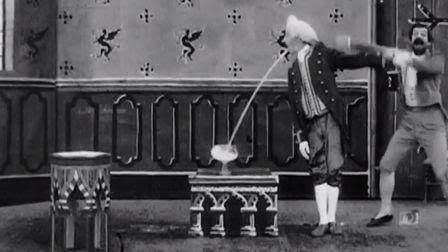
Excelsior! Prince of Magicians (Georges Méliès, France)


1922
Cops (Buster Keaton, USA)


1924
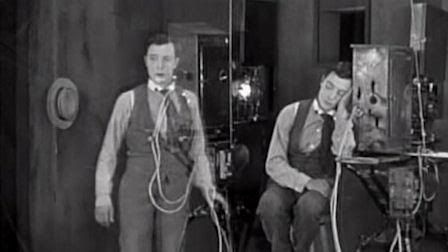
Sherlock Jr. (Buster Keaton, USA)
The Navigator (Buster Keaton, USA)


1925
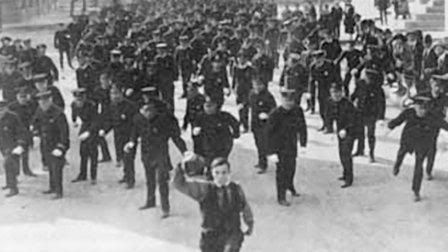
Battleship Potemkin (Sergei Eisenstein, Soviet Union)
Strike (Sergei Eisenstein, Soviet Union)


1926
The Scarlet Letter (Victor Sjöström, USA)
Mother (Vsevolod Pudovkin, Soviet Union)
A Sixth Part of the World (Dziga Vertov, Soviet Union)
A Page of Madness (Teinosuke Kinugasa, Japan)


1927
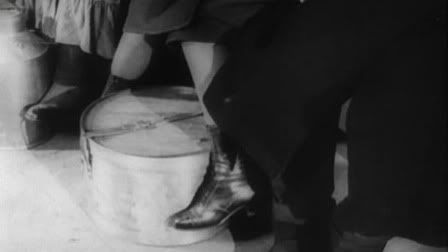
The Girl with the Hat Box (Boris Barnet, Soviet Union)
Bed and Sofa (Abram Room, Soviet Union)
Metropolis (Fritz Lang, Germany)


1928
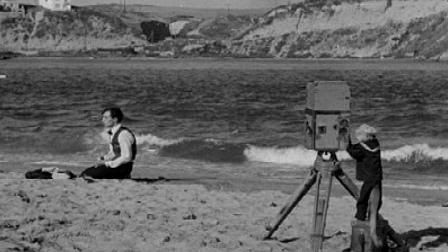
The Cameraman (Edward Sedgwick, USA)
The Wind (Victor Sjöström, USA)
The Passion of Joan of Arc (Carl Theodor Dreyer, France)


1930
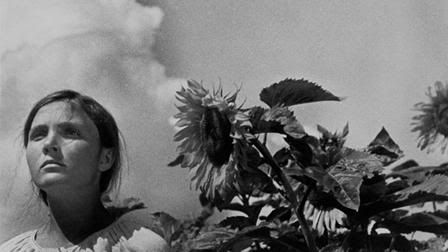
Earth (Aleksandr Dovzhenko, Soviet Union)


1931
À Nous la Liberté (René Clair, France)


1932
I Was Born, But... (Yasujiro Ozu, Japan)


1933
Design for Living (Ernst Lubitsch, USA)


1934
The Goddess (Wu Yonggang, China)
Our Neighbor Miss Yae (Yasujiro Shimazu, Japan)


1935
Happiness (Aleksandr Medvedkin, Soviet Union)


1936
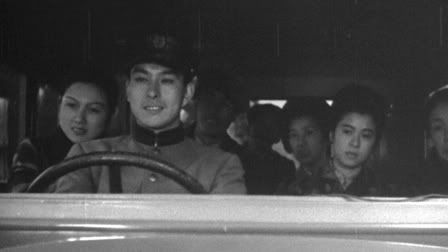
Mr. Thank You (Hiroshi Shimizu, Japan)
The Crime of Monsieur Lange (Jean Renoir, France)


1938
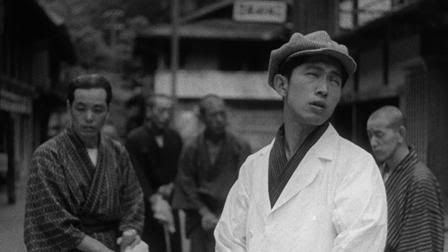
The Masseurs and a Woman (Hiroshi Shimizu, Japan)
Holiday (George Cukor, USA)
Bringing Up Baby (Howard Hawks, USA)


1940
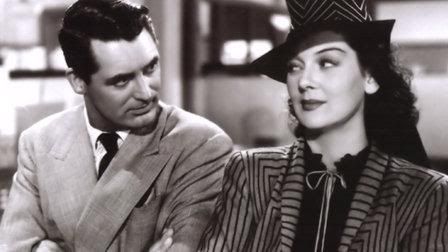
His Girl Friday (Howard Hawks, USA)


1941
The Lady Eve (Preston Sturges, USA)
Hellzapoppin' (H.C. Potter, USA)


1942
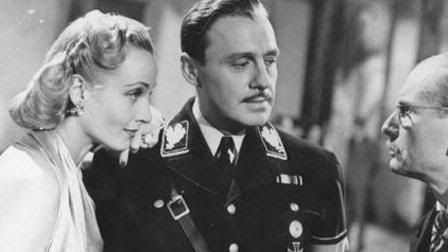
To Be or Not to Be (Ernst Lubitsch, USA)


1943
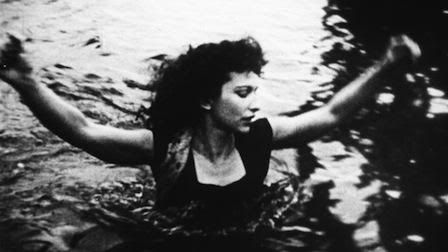
Meshes of the Afternoon (Maya Deren, USA)
Day of Wrath (Carl Theodor Dreyer, Denmark)


1944
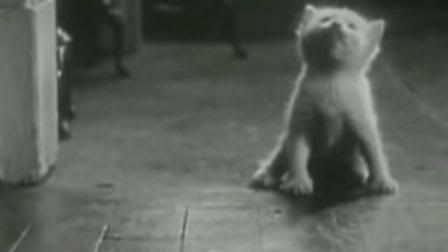
The Private Life of a Cat (Alexander Hammid, USA)
Jammin' the Blues (Gjon Mili, USA)


1945
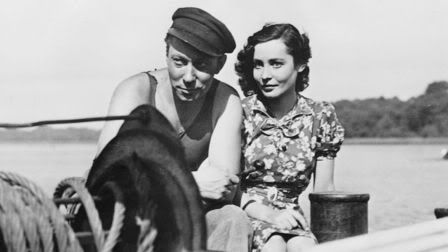
Under the Bridges (Helmut Käutner, Germany)


1946
Ritual in Transfigured Time (Maya Deren, USA)
Shoeshine (Vittorio De Sica, Italy)


1947
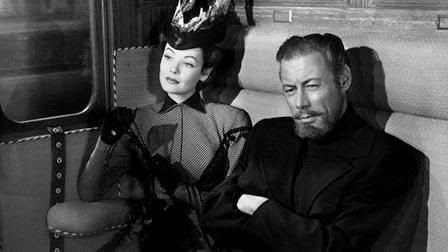
The Ghost and Mrs. Muir (Joseph L. Mankiewicz, USA)
Fireworks (Kenneth Anger, USA)
The Ball at the Anjo House (Kozaburo Yoshimura, Japan)


1948
Spring in a Small Town (Fei Mu, China)
The Red Shoes (Michael Powell & Emeric Pressburger, UK)


1949
The Reckless Moment (Max Ophüls, USA)
Begone Dull Care (Evelyn Lambart & Norman McLaren, Canada)


1950
Un Chant D'amour (Jean Genet, France)
Orpheus (Jean Cocteau, France)
Los Olvidados (Luis Buñuel, Mexico)


1951
Venom and Eternity (Isidore Isou, France)


1952
Casque D'or (Jacques Becker, France)
The Narrow Margin (Richard Fleischer, USA)


1953
The Saga of Anatahan (Josef von Sternberg, Japan)
Duck Amuck (Chuck Jones, USA)


1954
Johnny Guitar (Nicholas Ray, USA)
The Thunder of the Mountain (Mikio Naruse, Japan)
Sansho the Bailiff (Kenji Mizoguchi, Japan)


1955
Ordet (Carl Theodor Dreyer, Denmark)
The Night of the Hunter (Charles Laughton, USA)
Night and Fog (Alain Resnais, France)


1956
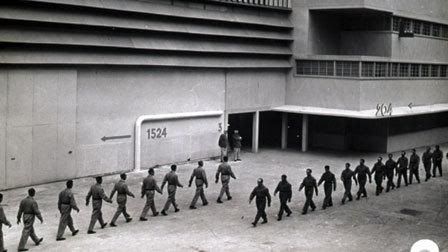
A Man Escaped (Robert Bresson, France)
Street of Shame (Kenji Mizoguchi, Japan)
Crazed Fruit (Kô Nakahira, Japan)
A Girl in Black (Mihalis Kakogiannis, Greece)
Flowing (Mikio Naruse, Japan)

1957
Kisses (Yasuzo Masumura, Japan)
Pyaasa (Guru Dutt, India)
Kanal (Andrzej Wajda, Poland)
A Chairy Tale (Norman McLaren & Claude Jutra, Canada)
Will Success Spoil Rock Hunter? (Frank Tashlin, USA)
The Incredible Shrinking Man (Jack Arnold, USA)
The Cranes Are Flying (Mikhail Kalatozov, Soviet Union)
Paths of Glory (Stanley Kubrick, USA)

1958
Ashes and Diamonds (Andrzej Wajda, Poland)
Giants and Toys (Yasuzo Masumura, Japan)
Murder by Contract (Irving Lerner, USA)
Flower in Hell (Shin Sang-ok, South Korea)
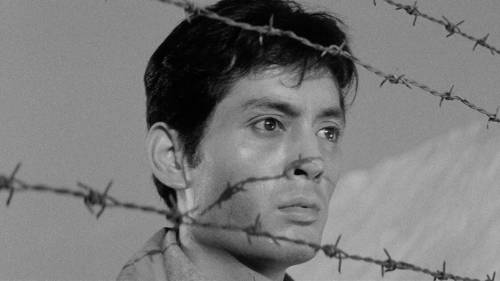
1959
The Human Condition (Masaki Kobayashi, Japan)
Rio Bravo (Howard Hawks, USA)
Good Morning (Yasujiro Ozu, Japan)
Some Like It Hot (Billy Wilder, USA)
Pickpocket (Robert Bresson, France)

1960
The Cloud-Capped Star (Ritwik Ghatak, India)
When a Woman Ascends the Stairs (Mikio Naruse, Japan)
The Apartment (Billy Wilder, USA)
Daughters, Wives and a Mother (Mikio Naruse, Japan)
Rocco and His Brothers (Luchino Visconti, Italy)

1961
Il Posto (Ermanno Olmi, Italy)
Last Year at Marienbad (Alain Resnais, France)
The Errand Boy (Jerry Lewis, USA)
Viridiana (Luis Buñuel, Spain)
Very Nice, Very Nice
(Arthur Lipsett, Canada)
Accattone (Pier Paolo Pasolini, Italy)

1962
The Exterminating Angel (Luis Buñuel, Mexico)
Window Water Baby Moving
(Stan Brakhage, USA)
...A Valparaiso (Joris Ivens, Chile)
Ivan's Childhood (Andrei Tarkovsky, Soviet Union)

1963
The House Is Black (Forough Farrokhzad, Iran)
The Big City (Satyajit Ray, India)
La Ricotta (Pier Paolo Pasolini, Italy)
Blow Job (Andy Warhol, USA)
Joseph Kilian (Pavel Jurácek & Jan Schmidt, Czechoslovakia)
Vidas Secas (Nelson Pereira dos Santos, Brazil)
I Fidanzati (Ermanno Olmi, Italy)

1964
Scorpio Rising (Kenneth Anger, USA)
Yearning (Mikio Naruse, Japan)
Noite Vazia (Walter Hugo Khouri, Brazil)
I Am Cuba (Mikhail Kalatozov, Cuba)
Shadows of Forgotten Ancestors (Sergei Parajanov, Soviet Union)
My Way Home (Miklós Jancsó, Hungary)
The Gospel According to St. Matthew (Pier Paolo Pasolini)
Red Desert (Michelangelo Antonioni, Italy)
Black God, White Devil (Glauber Rocha, Brazil)
Dry Summer (Metin Erksan, Turkey)
Band of Outsiders (Jean-Luc Godard, France)
Os Fuzis (Ruy Guerra, Brazil)
Dr. Strangelove, or How I Learned to Stop Worrying and Love the Bomb (Stanley Kubrick, USA)
21-87 (Arthur Lipsett, Canada)

1965
Subarnarekha (Ritwik Ghatak, India)
The War Game (Peter Watkins, UK)
Elégia (Zoltán Huszárik, Hungary)

1966
Coach to Vienna (Karel Kachyna, Czechoslovakia)
Andrei Rublev (Andrei Tarkovsky, Soviet Union)
Closely Watched Trains (Jirí Menzel, Czechoslovakia)
Fighting Elegy (Seijun Suzuki, Japan)
Red Angel (Yasuzo Masumura, Japan)
Wings (Larisa Shepitko, Soviet Union)
The Battle of Algiers (Gillo Pontecorvo, Italy)
Persona (Ingmar Bergman, Sweden)
Black Girl (Ousmane Sembène, Senegal)
Piece Mandala/End War (Paul Sharits, USA)
Young Törless (Volker Schlöndorff, West Germany)
Breakaway (Bruce Conner, USA)

1967
The Young Girls of Rochefort (Jacques Demy & Agnès Varda, France)
The Red and the White (Miklós Jancsó, Hungary)
Beginning (Artavazd Peleshian, Soviet Union)
Warrendale (Allan King, Canada)
La Chinoise (Jean-Luc Godard, France)
Terra em Transe (Glauber Rocha, Brazil)
1968
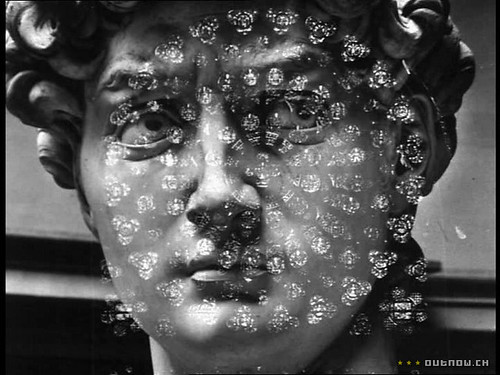
The Hour of the Furnaces (Octavio Getino & Fernando E. Solanas, Argentina)
Memories of Underdevelopment (Tomás Gutiérrez Alea, Cuba)
Reconstruction (Lucian Pintilie, Romania)
Death by Hanging (Nagisa Ôshima, Japan)
Pas de Deux (Norman McLaren, Canada)
Valley of the Bees (František Vláčil, Czechoslovakia)
Teorema (Pier Paolo Pasolini, Italy)
Diary of a Shinjuku Thief (Nagisa Ôshima, Japan)
The Cremator (Juraj Herz, Czechoslovakia)
Color of Pomegranates (Sergei Parajanov, Soviet Union)
L'Enfance Nue (Maurice Pialat, France)
T,O,U,C,H,I,N,G (Paul Sharits, USA)

1969
Antonio das Mortes (Glauber Rocha, Brazil)
Eros Plus Massacre (Yoshishige Yoshida, Japan)
Katzelmacher (Rainer Werner Fassbinder, West Germany)
Blind Beast (Yasuzo Masumura, Japan)
Invocation of my Demon Brother (Kenneth Anger, USA)
Funeral Parade of Roses (Toshio Matsumoto, Japan)
Shonen (Nagisa Ôshima, Japan)
We (Artavazd Peleshian, Soviet Union)
The Sorrow and the Pity (Marcel Ophüls, France)
Kes (Ken Loach, UK)

1970
Days and Nights in the Forest (Satyajit Ray, India)
This Transient Life (Akio Jissoji, Japan)
Once Upon a Time There Was a Singing Blackbird (Otar Iosseliani, Georgia)
Adelheid (František Vláčil, Czechoslovakia)
El Topo (Alejandro Jodorowsky, Mexico)

1971
The Third Part of the Night (Andrzej Żuławski, Poland)
Throw Away Your Books, Rally in the Streets (Shûji Terayama, Japan)
Punishment Park (Peter Watkins, USA)
Walkabout (Nicolas Roeg, Australia)
Harold and Maude (Hal Ashby, USA)
Evdokia (Alexis Damianos, Greece)
Death in Venice (Luchino Visconti, Italy)

1972
My Childhood (Bill Douglas, UK)
The Adversary (Satyajit Ray, India)
The Devil (Andrzej Żuławski, Poland)
Lucifer Rising (Kenneth Anger, USA)
Ballet Adagio (Norman McLaren, Canada)

1973
Castle of Purity (Arturo Ripstein, Mexico)
The Spirit of the Beehive (Victor Erice, Spain)
Through and Through (Grzegorz Królikiewicz, Poland)
Island (Fyodor Khitruk, Soviet Union)

1974
Un Homme qui Dort (Bernard Queysanne, France)
Edvard Munch (Peter Watkins, Norway)
Pastoral: To Die in the Country (Shûji Terayama, Japan)
Penda's Fen (Alan Clarke, UK)
Ali: Fear Eats the Soul (Rainer Werner Fassbinder, West Germany)
The Enigma of Kaspar Hauser (Werner Herzog, West Germany)
1975
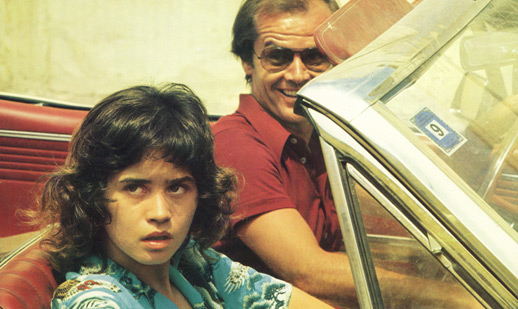
The Passenger (Michelangelo Antonioni, Italy)
Jeanne Dielman, 23, Quai du Commerce, 1080 Bruxelles (Chantal Akerman, Belgium)
Shivers (David Cronenberg, Canada)
Xala (Ousmane Sembène, Senegal)
Fox and His Friends (Rainer Werner Fassbinder, West Germany)
The Battle of Chile (Patricio Guzmán, Chile)
The Travelling Players (Theo Angelopoulos, Greece)
Seven Beauties (Lina Wertmüller, Italy)
Dog Day Afternoon (Sidney Lumet, USA)
Salo, or 120 Days of Sodom (Pier Paolo Pasolini, Italy)

1976
Harvest: 3000 Years (Haile Gerima, Ethiopia)
Insiang (Lino Brocka, Philippines)
Cria Cuervos... (Carlos Saura, Spain)
The Wishing Tree (Tengiz Abuladze, Georgia)
Sebastiane (Derek Jarman, UK)
Chinese Roulette (Rainer Werner Fassbinder, West Germany)
Assault on Precinct 13 (John Carpenter, USA)

1977
The Perfumed Nightmare (Kidlat Tahimik, Philippines)
Io Island (Kim Ki-young, South Korea)
Hausu (Nobuhiko Obayashi, Japan)
Ceddo (Ousmane Sembène, Senegal)
The Ascent (Larisa Shepitko, Soviet Union)
Annie Hall (Woody Allen, USA)
A Grin Without a Cat (Chris Marker, France)
Suspiria (Dario Argento, Italy)

1978
Les Rendez-vous d'Anna (Chantal Akerman, Belgium)
The Tree of Wooden Clogs (Ermanno Olmi, Italy)
Jubilee (Derek Jarman, UK)
Veredas (João César Monteiro, Portugal)
In a Year of Thirteen Moons (Rainer Werner Fassbinder, West Germany)

1979
Camera Buff (Krzysztof Kieślowski, Poland)
The Hypothesis of the Stolen Painting (Raúl Ruiz, France)
And Quiet Rolls the Dawn (Mrinal Sen, India)

1980
The Age of the Earth (Glauber Rocha, Brazil)
The Falls (Peter Greenaway, UK)
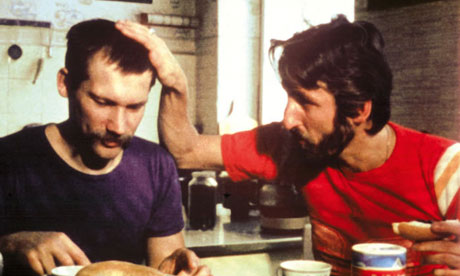
Arrebato (Iván Zulueta, Spain)
1981
Taxi zum Klo (Frank Ripploh, West Germany)
Possession (Andrzej Żuławski, France)
Turumba (Kidlat Tahimik, Philippines)
Pixote (Hector Babenco, Brazil)
Polyester (John Waters, USA)

1982
Batch '81 (Mike de Leon, Philippines)
Querelle (Rainer Werner Fassbinder, West Germany)
Himala (Ishmael Bernal, Philippines)
Tenebre (Dario Argento, Italy)

1983
Sans Soleil (Chris Marker, France)
Videodrome (David Cronenberg, Canada)
Born in Flames (Lizzie Borden, USA)
The Boys from Fengkuei (Hou Hsiao-Hsien, Taiwan)
A Question of Silence (Marleen Gorris, Netherlands)
L'Argent (Robert Bresson, France)
Local Hero (Bill Forsyth, UK)

1984
Shades of a Fern (František Vláčil, Czechoslovakia)
Manuel on the Island of Wonders (Raúl Ruiz, France)
Nausicaä of the Valley of the Wind (Hayao Miyazaki, Japan)
Stranger than Paradise (Jim Jarmusch, USA)
My Friend Ivan Lapshin (Aleksei German, Soviet Union)
When the Tenth Month Comes (Đặng Nhật Minh, Vietnam)
What Have I Done to Deserve This? (Pedro Almodóvar, Spain)
Stop Making Sense (Jonathan Demme, USA)
Barres (Luc Moullet, France)

1985
Phenomena (Dario Argento, Italy)
A Zed and Two Noughts (Peter Greenaway, UK)
Come and See (Elem Klimov, Soviet Union)
A Time to Live and a Time to Die (Hou Hsiao-Hsien, Taiwan)
Day of the Dead (George A. Romero, USA)
Submit to Me (Richard Kern, USA)
After Hours (Martin Scorsese, USA)
Tampopo (Jûzô Itami, Japan)

1986
The Green Ray (Éric Rohmer, France)
Mauvais Sang (Leos Carax, France)
Peking Opera Blues (Tsui Hark, Hong Kong)
Dust in the Wind (Hou Hsiao-Hsien, Taiwan)
Withnail and I (Bruce Robinson, UK)

1987
Law of Desire (Pedro Almodóvar, Spain)
Yeelen (Souleymane Cissé, Mali)
Where Is the Friend's Home? (Abbas Kiarostami, Iran)

1988
A Tale of the Wind (Joris Ivens, France)
Landscape in the Mist (Theo Angelopoulos, Greece)
July (Darezhan Omirbaev, Kazakhstan)
A Short Film About Love (Krzysztof Kieślowski, Poland)
Dead Ringers (David Cronenberg, Canada)
Chocolat (Claire Denis, France)
High Hopes (Mike Leigh, UK)

1989
Chameleon Street (Wendell B. Harris, USA)
Kiki's Delivery Service (Hayao Miyazaki, Japan)
A City of Sadness (Hou Hsiao-Hsien, Taiwan)
Tongues Untied (Marlon Riggs, USA)
Island of Flowers (Jorge Furtado, Brazil)
Mystery Train (Jim Jarmusch, USA)
The Cook, the Thief, His Wife & Her Lover (Peter Greenaway, UK)

1990
Close-up (Abbas Kiarostami, Iran)

1991
A Brighter Summer Day (Edward Yang, Taiwan)
Les Amants du Pont-Neuf (Leos Carax, France)
A Little Stiff (Caveh Zahedi & Greg Watkins, USA)
Only Yesterday (Isao Takahata, Japan)
Three Days (Sharunas Bartas, Lithuania)
Night and Day (Chantal Akerman, France)
Edward II (Derek Jarman, UK)
Prospero's Books (Peter Greenaway, UK)

1992
Rock Hudson's Home Movies (Mark Rappaport, USA)
Rebels of the Neon God (Tsai Ming-Liang, Taiwan)
Kairat (Darezhan Omirbaev, Kazakhstan)
The Living End (Gregg Araki, USA)
Center Stage (Stanley Kwan, Hong Kong)
Hyenas (Djibril Diop Mambéty, Senegal)

1993
My Nightmare (Richard Kern, USA)
Blue (Derek Jarman, UK)
Calendar (Atom Egoyan, Canada)

1994
I Can't Sleep (Claire Denis, France)
A Confucian Confusion (Edward Yang, Taiwan)
Chungking Express (Wong Kar-Wai, Hong Kong)
Wild Reeds (André Téchiné, France)

1995
Safe (Todd Haynes, USA)
Whisper of the Heart (Yoshifumi Kondo, Japan)
From the Journals of Jean Seberg (Mark Rappaport, USA)
Fallen Angels (Wong Kar-Wai, Hong Kong)
Welcome to the Dollhouse (Todd Solondz, USA)

1996
A Moment of Innocence (Mohsen Makhmalbaf, Iran)
Irma Vep (Olivier Assayas, France)
Crash (David Cronenberg, Canada)
Leila (Dariush Mehrjui, Iran)
Deep Crimson (Arturo Ripstein, Mexico)
The Pillow Book (Peter Greenaway, UK)
A Summer Dress (François Ozon, France)

1997
Happy Together (Wong Kar-Wai, Hong Kong)
Sick: The Life and Death of Bob Flanagan, Supermasochist (Kirby Dick, USA)
Princess Mononoke (Hayao Miyazaki, Japan)
The River (Tsai Ming-Liang, Taiwan)

1998
The Hole (Tsai Ming-Liang, Taiwan)
Turbulent (Shirin Neshat, Iran)
Lovers of the Arctic Circle (Julio Médem, Spain)
Fucking Åmål
(Lukas Moodysson, Sweden)

1999
The Little Girl Who Sold the Sun (Djibril Diop Mambéty, Senegal)
All About My Mother (Pedro Almodóvar, Spain)
Outer Space (Peter Tscherkassky, Austria)
Beau Travail (Claire Denis, France)

2000
La Commune (Paris, 1871) (Peter Watkins, France)
Yi Yi (Edward Yang, Taiwan)
The Day I Became a Woman (Marzieh Makhmalbaf, Iran)
The Heart of the World (Guy Maddin, Canada)
The Gleaners and I (Agnès Varda, France)
Faat Kiné (Ousmane Sembène, Senegal)
O Fantasma (João Pedro Rodrigues, Portugal)

2001
The Fourth Dimension (Trinh T. Minh-ha, USA)
La Ciénaga (Lucrecia Martel, Argentina)
Trouble Every Day (Claire Denis, France)
Y Tu Mamá También (Alfonso Cuarón, Mexico)

2002
Friday Night (Claire Denis, France)
Lilja 4-ever (Lukas Moodysson, Sweden)
Ten (Abbas Kiarostami, Iran)
Japón (Carlos Reygadas, Mexico)
Sweet Sixteen (Ken Loach, UK)

2003
Crimson Gold (Jafar Panahi, Iran)
Fast Film (Virgil Widrich, Austria)
The Saddest Music in the World (Guy Maddin, Canada)
The Forest for the Trees (Maren Ade, Germany)

2004
The Raspberry Reich (Bruce LaBruce, Canada)
Eternal Sunshine of the Spotless Mind (Michel Gondry, USA)
Mysterious Skin (Gregg Araki, USA)
Before Sunset (Richard Linklater, USA)
Tropical Malady (Apichatpong Weerasethakul, Thailand)
Moolaadé (Ousmane Sembène, Senegal)

2005
A Short Film About the Indio Nacional (or the Prolonged Sorrow of the Filipinos) (Raya Martin, Philippines)
The Wayward Cloud (Tsai Ming-Liang, Taiwan)
The Death of Mr. Lăzărescu (Cristi Puiu, Romania)
Oxhide (Liu Jiayin, China)

2006
Syndromes and a Century (Apichatpong Weerasethakul, Thailand)
Offside (Jafar Panahi, Iran)
Brand Upon the Brain! (Guy Maddin, Canada)

2007
Death in the Land of Encantos (Lav Diaz, Philippines)
United Red Army
(Kôji Wakamatsu, Japan)
My Winnipeg (Guy Maddin, Canada)

2008
Melancholia (Lav Diaz, Philippines)
Blind Pig Who Wants to Fly
(Edwin, Indonesia)
Now Showing (Raya Martin, Philippines)

2009
To Die Like a Man (João Pedro Rodrigues, Portugal)
Ne Change Rien (Pedro Costa, Portugal)
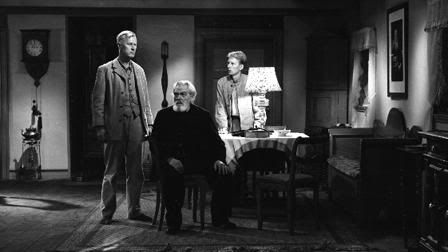
The White Ribbon (Michael Haneke, Austria)
Raging Sun, Raging Sky (Julián Hernández, Mexico)
Everyone Else (Maren Ade, Germany)

2010
Honey (Semih Kaplanoğlu, Turkey)
Nostalgia for the Light (Patricio Guzmán, Chile)

******
Ciao!