Showing posts with label TOP 20 FILMS. Show all posts

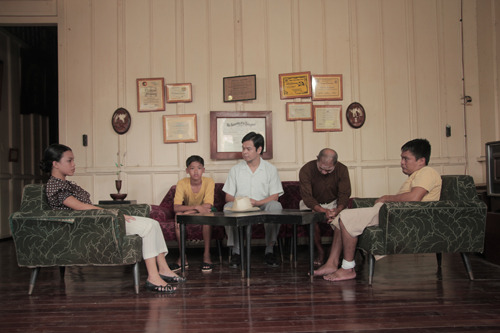
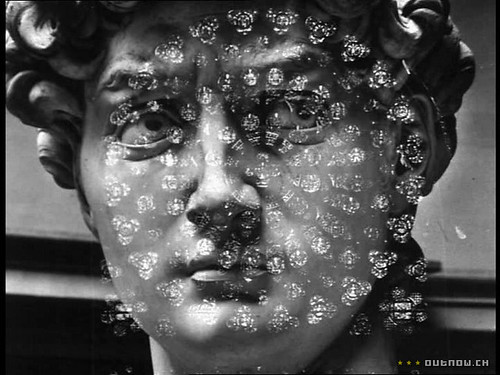
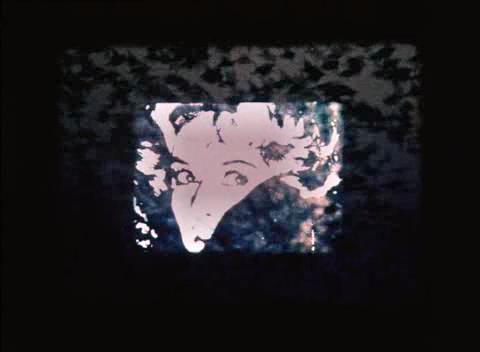
Trails of a Cloud: A Journey to the Island of Wonders


Archive of desires. 


.
.
.


Histories.

.
.
.

Intensities.


Traumas,                                 scars.


Virtualities.


Actualities. 


.
.
.


Escapes.


Land-escapes.


.
.
.

City-escapes.

Stills.


---------------------


2013

Lukas Nino (John Torres/ Philippines)
A Spell to Ward Off Darkness (Ben Russell and Ben Rivers / Finland) *

Guerrilla is a Poet (Sari and Kiri Dalena / Philippines)
Maliw (Rob Jara / Philippines)
Before Midnight (Richard Linklater / USA)
Redemption (Miguel Gomes / Portugal) *

Pantomime for Figures Shrouded by Waves (Jon Lazam / Philippines)
Islands (Whammy Alcazaren / Philippines)
Ang Pagbabalat ng Ahas (Timmy Harn / Philippines)
Ilo Ilo (Anthony Chen / Singapore) *
The Missing Picture (Rithy Panh / Cambodia) *


2012


Darna: A Stone is A Heart You Can't Swallow (Jon Lazam /
Philippines)

Leviathan (Verena Paravel and Lucien Castaing-Taylor / U.K.)
Colossal (Wyhammy Alcazaren / Philippines)
Jungle Love (Sherad Anthony Sanchez / Philippines) 
Amour (Michael Haneke / Austria)
Post Tenebras Lux (Carlos Reygadas / Mexico)
In Another Country (Hong Sang-Soo / South Korea)
Holy Motors (Léos Carax / France)
Forever Loved (Christopher Gozum / Philippines)
Mondomanila (Khavn dela Cruz / Philippines)
What the Chicken Knows (Ramon Raquid / Philippines)
Maximalist (John Torres / Philippines)
Taglish (Gym Lumbera / Philippines)
Walang Kaluluwah (Jet Leyco / Philippines)
Mamay Umeng (Dwein Baltazar / Philippines)


2011


Of Skies and Earth (Mes De Guzman / Philippines)

The Moon is Not Ours (Jon Lazam /Philippines)
Two Years at Sea (Ben Rivers / U.K.)
The Day He Arrives (Hong Sang-soo / South Korea)
Century of Birthing (Lav Diaz / Philippines)
Buenas Noches, España (Raya Martin / Philippines, Spain)
Correspondenec: Jonas Mekas - J.L. Guerin (José Luis Guerín and Jonas Mekas / Spain)
Hai, they recycle heartbreaks in Tokyo so nothing’s wasted (John Torres / Philippines)

2010


Nostalgia for the Light (Patricio Guzmán / Chile)

Raging Sun, Raging Sky (Julián Hernández / Mexico) Q
Film Socialisme (Jean-Luc Godard / Switzerland, France)
Refrains Happen Like Revolutions in a Song (John Torres / Philippines)
Honey (Semih Kaplanoğlu / Germany, Turkey)
Stone is the Earth (Mes de Guzman / Philippines)

2009

Independencia (Raya Martin / France, Philippines)

Disorder (Huang Weikai / China)
To Die Like a Man (João Pedro Rodrigues / Portugal) Q
Trash Humpers (Harmony Korine / USA)
The White Ribbon (Michael Haneke / Germany)


Now Showing (Raya Martin / Philippines / 2008)

2008


Ah, Liberty! (Ben Rivers / U.K.)

Blind Pig Who Wants To Fly (Edwin / Indonesia)
A Lake (Philippe Grandrieux / France)
La Vie Moderne (Raymond Depardon / France) *

The Beaches of Agnes (Agnès Varda / France)
Now Showing (Raya Martin / Philippines)
Slideshow (Lara Acuin / Philippines)
Andalusian Bitch (Sasha Palomares / Philippines)

2007


Death in the Land of Encantos (Lav Diaz / Philippines)

At Sea (Peter Hutton / USA)
Silencio (François-Jacques Ossang / Portugal)
Secret Sunshine (Lee Chang-dong / South Korea)
My Winnipeg (Guy Maddin / Canada)
United Red Army (Kôji Wakamatsu / Japan)
Autohystoria (Raya Martin / Philippines)
Profit Motive and the Whispering Wind (John Gianvito / USA)
In the City of Sylvia (Jose Luis Guerin / Spain) *

Quiet Chaos of Desire (Carl E. Brown / Canada)

2006


Fantasma (Lisandro Alonso / France)

Heremias (Book One: The Legend of the Lizard Princess) (Lav Diaz /Philippines)
Inland Empire (David Lynch / USA)
Brand Upon the Brain! (Guy Maddin / Canada)
Todo Todo Teros (John Torres / Philippines)
Syndromes and A Century (Apichatpong Weerasethakul / Austria)
Flanders (Bruno Dumont / France)
Blockade (Sergei Loznitsa / Ukraine) *


2005


The Wayward Cloud (Tsai Ming-liang / Taiwan)

A Short Film About Indio Nacional (Raya Martin / Philippines)
It Feels so Good to be Alive (Antoinette Jadaone / Philippines)
Instructions to the Light and Sound Machine (
Peter Tscherkassky / Austria)

Lunacy (Jan Švankmajer / Czechoslovakia)
Zoopraxiscope (Hieronim Neumann / Poland) *


2004


Evolution of a Filipino Family (Lav Diaz / Philippines)

Tropical Malady (Apichatpong Weerasethakul / Thailand) Q
The Sky Turns (Mercedes Álvarez / Spain)
A Tree in Tanjung Malim (Tan Chui Mui / Malaysia)
Light is Calling (Bill Morrison / USA)
Moolaade (Ousmane Sembene / Burkina Faso)
The Raspberry Reich (Bruce LaBruce / Canada) Q
The Case of the Grinning Cat (Chris Marker / France)


Meditations on Revolution, Part V: Foreign City (Robert Fenz / USA.)

2003

Meditations on Revolution, Part V: Foreign City (Robert Fenz / 
USA)
Mirror (Christoph Girardet & Matthias Müller / Germany)

2002


A New Life (Philippe Grandrieux / France)

The Hours (Stephen Daldry / U.K.)
Ten (Abbas Kiarostami / France, Iran)
The Son (Jean-Pierre Dardenne and Luc Dardenne / Belgium)
Japon (Carlos Reygadas / Mexico)
On the Occasions of Remembering the Turning Gate (Hong Sang-Soo / South Korea)
Distant (Nuri Bilge Ceylan / Turkey)

Dream Work (Peter Tscherkassky / Austria) 
Decasia (Bill Morrison / USA)

2001


Batang West Side (Lav Diaz / Philippines, 
USA)
Meditations on Revolution, Part III: Soledad (Robert Fenz / USA)
Remembrance of Things to Come (Yannick Bellon and Chris Marker / France)
Elsewhere (Nikolaus Geyrhalter / Austria)
Trouble Every Day (Claire Denis / Germany)
La Libertad (Lisandro Alonso / Argentina)
The Fourth Dimension (Trinh T. Minh-ha / USA, Vietnam)
Millennim Mambo (Hou Hsiao-hsien / France)
Pulse (Kiyoshi Kurosawa / Japan)


2000


Virgin Stripped Bare by Her Bachelors (Hong Sang-Soo / South Korea)

Werckmeister Harmonies (Bela Tarr / Hungary)
O Fantasma (João Pedro Rodrigues / Portugal) Q
As I Was Moving Ahead Occasionally I Saw Brief Glimpses of Beauty (Jonas Mekas / USA)
Mysterious Object at Noon (Apichatpong Weerasethakul / Thailand)
The Gleaners and I (Agnès Varda / France)
Platform (Jia Zhangke / China, France)
Eureka (Shinji Aoyama / France, Japan)
Devils on the Doorstep (Jiang Wen / China) *
Yi Yi: A One and A Two (Edward Yang / Taiwan)


The Little Girl Who Sold the Sun (Djibril Diop Mambéty / Senegal / 1999)

1999

The Little Girl Who Sold the Sun (Djibril Diop Mambéty / Senegal)

Rosetta (Jean-Pierre Dardenne and Luc Dardenne / Belgium)
The Wind Will Carry Us (Abbas Kiarostami / Iran)
Beau Travail (Claire Denis / France) Q
Outer Space (Peter Tscherkassky / Austria)

1998


The Hole (Tsai Ming-liang / Taiwan) 

Lovers of the Arctic Circle (Julio Medem / Spain) *
Histoire(s) du Cinema (Jean-Luc Godard / Switzerland, France)

1997


White Funeral (Sari Dalena / Philippines)
Doctor Chance (François-Jacques Ossang / Chile)

Meditations on Revolution, Part II: The Space in Between (Robert Fenz USA)
Finished (William E. Jones / USAQ
Pensao Globo (Matthias Müller / Germany) Q
The River (Tsai Ming-liang / Taiwan) Q
Chile, Obstinate Memory (Patricio Guzman / Chile) *
Princess Mononoke (Hayao Miyazaki / Japan)
Happy Together (Wong Kar-wai / Hong Kong) Q
The Story of the Cat and the Moon (Pedro Serrazina / Portugal)


A Moment of Innocence (Mohsen Makhmalbaf / Iran / 1996)

1996


Leila (Dariush Mehrjui / Iran)

A Moment of Innocence (Mohsen Makhmalbaf / Iran)
Crash (David Cronenberg / Canada)
Saint (Bavo Defurne / Belgium) Q
Le Recontre (Alain Cavalier / France)

1995


Antigravitation (Audrium Stonys / Lithuania)
Bontoc Eulogy (Marlon Fuentes and Bridget Yearian / USA, Philippines)

Zone (Takashi Ito / Japan)

1994


Vive L'Amour (Tsai Ming-liang / Taiwan)

Wild Reeds (André Téchiné / France) Q
The Corridor (Sharunas Bartas / Lithuania)
What Happened Was... (Tom Noonan / U.S.)
End (Artavazd Peleshian / Armenia)
I Can't Sleep (Claire Denis / France)
Through the Olive Trees (Abbas Kiarostami / Iran)
Chunking Express (Wong Kar-Wai / Hong Kong)
Three Colors: Red (Krzysztof Kieślowski / Poland, France)

1993


The Last Bolshevik (Chris Marker / Finland) 

My Nightmare (Richard Kern / USA)
Blue (Derek Jarman / U.K.) Q
Abraham's Valley (Manoel de Oliveira / Portugal)
Death Train (Bill Morrison / USA)
Sleepy Haven (Matthias Müller and Dirk Schaefer / Germany) Q


1992


Kairat (Darezhan Omirbaev / Kazakhstan)

The Earth is Blind (Audrius Stonys / Lithuania)
Videograms of a Revolution (Harun Farocki & Andrei Ujică / Austria)

1991


The Double Life of Veronique (Krzysztof Kieślowski / France)
Massilon (William E. Jones / USAQ
Night and Day (Chantal Akerman / Belgium)
The Road to the Racetrack (Jang Sun-woo / South Korea)
A Brighter Summer Day (Edward Yang / Taiwan)
The Lovers on the Bridge (Léos Carax / France)
Life, and Nothing More... (Abbas Kiarostami / Iran)


Night Highway (Bill Morrison / USA / 1990)

1990


Sanctus (Barbara Hammer  / 
USAQ
Close-Up (Abbas Kiarostami / Iran)
Begotten (E. Elias Merhige / USA)
Night Highway (Bill Morrison / USA)


1989


Orapronobis (Lino Brocka / Philippines)

Near Death (Frederick Wiseman / USA)
Tongues Untied (Marlon Riggs / USAQ
Route One/USA (Robert Kramer / U.K.)
Sweetie (Jane Campion / Austrailia, New Zealand)
The Decalogue (Krzysztof Kieslowski / Poland)
A City of Sadness (Hou Hsiao-hsien, Taiwan)
Island of Flowers (Jorge Furtado / Brazil)
Image of the World and the Inscription of War (Harun Farocki / West Germany) *


1988


Landscape in the Mist (Theodoros Angelopoulos / Greece)

(Absolutions) Pipilotti's Mistakes (Pipilotti Rist / Switzerland)
A Short Film About Love (Krzysztof Kieślowski / Poland)

1987


Walls (Piotr Dumala / Poland)

Where is the Friend's Home? (Abbas Kiarostami / Iran)


1986


The Terrorizers (Edward Yang / Hong Kong, Taiwan)

The Green Ray (Éric Rohmer / France)
Landscape Suicide (James Benning / USA) *

New York, N.Y. (Raymond Depardon / France)
A Time to Live and A Time to Die (Hou Hsiao-Hsien / Taiwan) *


1985


Submit to Me (Richard Kern / USA)

Manufraktur (Peter Tscherkassky / Austria)


1984


Ghost (Takashi Ito / Japan)
Nausicaa of the Valley of the Wind (Hayao Miyazaki / Japan)

Shades of Fern (František Vlácil / Czechoslovakia)
My Friend Ivan Lapshin (Aleksei German / USSR)


The Boys from Fengkuei (Hou Hsiao-hsien / Taiwan 1983)

1983

El Sur (Victor Erice / Spain) *
The Ruins (Mrinal Sen / India) *

Videodrome (David Cronenberg / Canada)
The Boys from Fengkuei (Hou Hsiao-hsien / Taiwan)
L'Argent (Robert Bresson / France)
Sans Soleil (Chris Marker / France)
City of Pirates (Raúl Ruiz / France
)

1982


Querelle (Rainer Werner Fassbinder / France) 
Q
The Wind (Souleymane Cissé / Mali)
Dimension of Dialogue (Jan Švankmajer / Czechoslovakia)

1981


Possession (Andrzej Zulawski / France)
Orderly or Unorderly (Abbas Kiarostami / Iran) *


1980


The Falls (Peter Greenaway / U.K.)

Bomba Star (Joey Gosiengfiao / Philippines)
Temptation Island (Joey Gosiengfiao / Philippines) Q
Arising from the Surface (Mani Kaul / India)
Taxi Zum Klo (Frank Ripploh / West Germany) Q
The Age of the Earth (Glauber Rocha / Brazil)
Rapture (Izan Zulueta / Spain) 
Q
The Fly (Ferenc Rófusz / Hungary)

1979


Stalker (Andrei Tarkovsky / USSR)

The Hypothesis of the Stolen Painting (Raúl Ruiz / France)
From the Clouds to the Resistance (Daniele Huillet, Jean-Marie Straub / Italy) *


1978


Liquid Crystals (Jean Painlevé / France)

In A Year with 13 Moons (Rainer Werner Fassbinder / West Germany) Q
Gravida Sketch I (Raymonde Carasco / France)
A Walk Through H: The Reincarnation of An Ornithologist (Peter Greenaway / U.K.)
Visions of a City (Larry Jordan / USA)
Les Rendez-Vous D'Anna (Chantal Akerman / Belgium)


1977


A Grin Without A Cat (Chris Marker / France)

Eraserhead (David Lynch / USA)
The Perfumed Nightmare (Kidlat Tahimik / Philippines) *


1976


Harvest: 3000 Years (Haile Gerima / Ethiopia)

The Wishing Tree (Tengiz Abuladze / USSR)
Bush Mama (Haile Gerima / USA)


1975


The Battle of Chile (Patricio Guzman / Chile) * 

Welfare (Frederick Wiseman / USA)
Fox and His Friends (Rainer Werner Fassbinder / West Germany) Q
Jeanne Dielman, 23, Quai du Commerce, 1080 Bruxelles (Chantal Akerman, France)
The Mirror (Andrei Tarkovsky / USSR)
Manila in the Claws of Light (Lino Brocka / Philippines)
Salo, Or the 120 Days of Sodom (Pier Paolo Pasolini / France)
Milestones (Robert Kramer and John Douglas / USA) *


Butterfly Dress Pledge (Shuji Terayama / Japan / 1974)

1974


Pastoral: To Die in the Country (Shûji Terayama / Japan) 
Q
The Man Who Sleeps (Bernard Queysanne / Tunisia, France)
You Have Been Weighed but Found Wanting (Lino Brocka / Philippines)
Ali: Fear Eats the Soul (Rainer Werner Fassbinder / West Germany)
Butterfly Dress Pledge (Shûji Terayama / Japan) Q

1973


Illumination (Krzysztof Zanussi / Poland)

The Spirit of the Beehive (Victor Erice / Spain)
Juvenile Court (Frederick Wiseman / 1973) *


1972


We Won't Grow Old Together (Maurice Pialat / Italy)

Tout Va Bien (Jean-Luc Godard, Jean-Pierre Gorin and Groupe Dziga Vertov / France)
Ballet Adagio (Norman McLaren / Canada)
Lucifer Rising (Kenneth Anger / U.K.) Q

1971


July '71 In San Francisco, Living At Beach Street, Working at Canyon 
Cinema, Swimming in the Valley of the Moon (Peter Hutton / USA)

The Courage of the People (Jorge Sanjinés / Bolivia)
Throw Away Your Books, Rally on the Streets (Shûji Terayama / Japan) Q
Synchromy (Norman McLaren / Canada)
The Third Part of the Night (Andrzej Zulawski / Poland)
Pink Narcissus (James Bidgood / USA) Q

1970


This Transient Life (Akio Jissoji / Japan)

Adelheid (František Vlácil / Czechoslovakia)
Inhabitants (Artavazd Peleshian / USSR)
Zorn's Lemma (Hollis Frampton / USA)
Once Upon A Time There Was A Singing Blackbird (Otar Iosseliani / USSR)
Spectator (Frans Zwartjes / Netherlands)


1969


Funeral Parade of Roses (Toshio Matsumuto / Japan) * 
Q
Blind Beast (Yasuzo Masumura / Japan)
Eros Plus Massacre (Yoshishige Yoshida / Japan)
Antonio Das Mortes (Glauber Rocha / Brazil)
My Night At Maud's (Éric Rohmer / France)
Visual Training (Frans Zwartjes / Netherlands)


Memories of Underdevelopment (Tomás Gutiérrez Alea / Cuba / 1968)

1968


Diatoms (Geneviève Hamon and Jean Painlevé / France)

Memories of Underdevelopment (Tomás Gutiérrez Alea / Cuba)
Death by Hanging (Nagisa Ôshima / Japan)
The Hour of the Furnaces (Octavio Getino and Fernando E. Solanas / Argentina)
L'Enfance Nue (Maurice Pialat / France)
Theorem (Pier Paolo Pasolino / Italy)
San Francisco (Anthony Stern / U.K.)
The Color of Pomegranates (Sergei Parajanov / USSR)
T,O,U,C,H,I,N,G (Paul Sharits / USA)
Nanami: The Inferno of First Love (Susumu Hani / Japan)

La Revolution N'est Qu'un Debut. Continuons Le Combat (Pierre Clementi / France)


1967


Far from Vietnam (various / France, Vietnam) *

Warrendale (Allan King / Canada)
Scaterred Clouds (Mikio Naruse / Japan)
La Collectionneuse (Éric Rohmer / France)
The Young Girls of Rocherfort (Jacques Demy and Agnès Varda / France)
Entranced Earth (Glauder Rocha / Brazil)
Mouchette (Robert Bresson / France)
Wavelength (Michael Snow / USA)
Belle de Jour (Luis Bunuel / France) *

La Chinoise (Jean-Luc Godard / France)
Playtime (Jacques Tati / France)
Beginning (Artavazd Peleshian / USSR)
Visa de Censure Numero X (Pierre Clementi / France)
Japanese Summer: Double Suicide (Nagisa Oshima / Japan) *


1966


Woman of the Lake (Yoshishige Yoshida / Japan)

The Golden Thread (Ritwik Ghatak / India)
Andrei Rublev (Andrei Tarkovsky / USSR)
Persona (Ingmar Bergman / Sweden)
Emotion (Nobuhiko Obayashi / Japan)

1965


Elegia (Zoltán Huszárik / Hungary)

I Knew Her Well (Antonio Pietrangeli / Italy)


1964


Charulata (Satyajit Ray / India) *
Intentions of Murder (Shôhei Imamura / Japan)

Yearning (Mikio Naruse / Japan)
Black God, White Devil (Glauber Rocha / Brazil) 
Scorpio Rising (Kenneth Anger / USA) Q
Band of Outsiders (Jean-Luc Godard / France)
Men and Women (Walter Hugo Khouri / Brazil)
21-87 (Arthur Lipsett / Canada)
Ödenwaldstetten (Peter Nestler/ West Germany)
Window (Ken Jacobs / USA)


1963


The Big City (Satyajit Ray / India)

Joseph Kilian (Pavel Jurácek and Jan Schmidt / Czechoslovakia)
The House is Black (Forugh Farrokhzad / Iran)
Flaming Creatures (Jack Smith / USA) Q
Le Joli Mai (Chris Marker, Pierre Lhomme / France) *

Mothlight (Stan Brakhage / USA)

1962


L'Eclisse (Michelangelo Antonioni / France, Italy)

The Exterminating Angel (Luis Buñuel / Mexico)
...A Valparaiso (Joris Ivens / France)
Window Water Baby Moving (Stan Brakhage / USA)
Winter Light (Ingmar Bergman / Sweden)
An Autumn Afternoon (Yasujiro Ozu / Japan)

Vivre Sa Vie (Jean-Luc Godard / France)


Very Nice, Very Nice (Arthur Lipsett / Canada / 1961)

1961


Last Year at Marienbad (Alain Resnais / France)

Viridiana (Luis Buñuel, Spain)
Very Nice, Very Nice (Arthur Lipsett / Canada)

1960


The Cloud-Capped Star (Ritwik Ghatak / India) *
The Naked Island (Kaneto Shindô / Japan)


1959


Good Morning (Yasujirô Ozu / Japan)

The Astronauts (Chris Marker and Walerian Borowczyk / France)
Pickpocket (Robert Bresson / France)
Hiroshima, Mon Amour (Alain Resnais / France)

1958


The Music Room (Satyajit Ray / India)
Somnambulists (Mieczyslaw Waskowski / Poland)*

1957


Kisses (Yasuzo Masumura / Japan)
Pyaasa (Guru Dutt / India) *

Yantra (James Whitney / USA)


1956


Child of Sorrow (Lamberto Avellana / Philippines)

A Man Escaped (Robert Bresson / France)


Night and Fog (Alain Resnais / France /1955)


1955

Night and Fog (Alain Resnais / France)
The Mechanics of Love (Willard Maas and Ben Moore / USA)

Ordet (Carl Theodor Dreyer / Denmark)
She was like a Wild Chrysanthemum (Keisuke Kinoshita / Japan) *
The Night of the Hunter (Charles Laughton / USA)

1954


An Inn at Osaka (Heinosuke Gosho / Japan)
Inaugurations of the Pleasure Dome (Kenneth Anger / USA) 
Q

1953


Ugetsu (Kenji Mizoguchi / Japan)

Where Chimneys Are Seen (Heinosuke Gosho / Japan)

1952


The Life of Oharu (Kenji Mizoguchi / Japan) *

1951


Diary of a Country Priest (Robert Bresson / France)


1950


Orpheus (Jean Cocteau / France)

A Song of Love (Jean Genet / France) Q
Afrique 50 (René Vautier / France)

1949


Late Spring (Yasujirô Ozu / Japan)


1948


1947


Fireworks (Kenneth Anger / USA) 
Q

1946


Ritual in Transfigured Time (Mayan Deren / USA)


1945


The Eye and the Ear (Franciszka Themerson & Stefan Themerson / U.K.)

1944

The Private Life of A Cat (Alexander Hammid / USA)

At Land (Maya Deren / USA)

1943


Day of Wrath (Carl Theodor Dreyer / Denmark)

Meshes of the Afternoon (Maya Deren and Alexander Hammid / USA)

1942


1941


The Lady Eve (Preston Sturges / USA)


1940


1939


1938


1937


1936


1935


The Goddess (Wu Yonggang / China / 1934)

1934


L'Atalante (Jean Vigo / France)

The Goddess (Wu Yonggang / China)

1933


Oramunde (Emlen Etting / USA)


1932


1931


Limite (Mário Peixoto / Brazil)

The Blood of A Poet (Jean Cocteau / France)

1930


Earth (Aleksandr Dovzhenko / Soviet Union / USSR)

L'Age D'Or (Luis Buñuel / France)

1929


The Pearl (Henri D'Ursel / Belgium)

Rain (Joris Ivens and Mannus Franken / Netherlands)

1928


The Cameraman (Edward Sedgwick and Buster Keaton / USA)


1927


1926


A Page of Madness (Teinosuke Kinugasa / Japan)

The Sixth Part of the World (Dziga Vertov / USSR)

1925


Battleship Potemkin (Sergei Eisenstein / USSR)


1924


1923


Faithful Heart (Jean Epstein / France)

1922


Nanook of the North (Robert J. Flaherty / USA)


1921


1920


The Cabinet of Dr. Caligari (Robert Wiene / Germany)


1919


1918


1917


1916


1915


1914


1913


1912


1911


1910


1909


1908


Electric Hotel (Segundo de Chomón / France)

The Haunted House (Segundo de Chomón / France)

1907


1906


Dream of a Rarebit Fiend (Wallace McCutcheon and Edwin S. Porter / USA)


King of Dollars (Segundo de Chomón / France / 1905)

1905


King of Dollars (Segundo de Chomón / France)


1904


1903


1902


A Trip to the Moon (Georges Méliès / France)


1901


1900


1899


1898


1897


1896


Arrival of a Train (Auguste Lumière and  Louis Lumière / France)


1895


L'Arroseur Arrose (Louis Lumière / France)


------------------------

Note on the list: Above is a tight, trimmed, and concise compilation of my favorite films collected and sifted from the last six to seven years of cinephilia. This is a reformatted version of my favorites from MUBI.com.

 ------------------------

Volumes of Light and Darkness: My Year With Cinema

for you who's sleeping by now... +

from Entranced Earth (Glauber Rocha, 1964)

To open my year 2011, I watched Sofia Coppola's Somewhere (2010). There in my bed, half past two in the morning, I tucked myself after a light New Year's Eve dinner. I was obliterated by the thought that another year had gone by. There I was, watching Somewhere, lost in my thoughts. Coppola's film felt empty; the last frame ended silently; and so was my room, filled with memories, dark and lonely. One wonders how one can suddenly feel terribly alone; all seemed lost; a year beginning, a year ending. The sky, though dark, was light, happy and simple.  No clouds above; only stars and a moon, smiling, cordially greeting the meadows, the wild grass, the empty lot by that side of Santiago Street a happy year ahead.

My family love this quietness around me. Provincial quietness, they say. Normally, one wakes up at four in the morning to water the plants, to feel adroitly wrapped by the night fog, to hear the trees howling with the wind, to die slowly in oblivion. There is more to dying at this hour of day than living. Yes, indeed, provincial life can be suffocating, having live in the city for more than five years. Gustave Flaubert's novel Madame Bovary has written immensely about these feelings and how ones sexual life, if repressed, can be self-destructive. But that is the case of Emma Bovary, unable to assimilate herself into the quietness of her provincial home probably because she was a woman of vision, of beauty, of intelligence that with such an unadventurous atmosphere at Rouen in Normandy she succumbed to her own nature thereby following herself; a woman's choice; a courageous act indeed, and so are the many feminine characters in literature who fought 'till the end like Tolstoy's Anna Karenina and Judith Shakespeare in Virginia Woolf's A Room of One's Own. But yes, indeed, they are victims of society's whim, being demonized as adulterous, indomitable women who all failed to subscribe to the conventional thought that a woman is a tamed creature. This geopolitics in Flaubert's novel concerns me extremely and I found myself extending it to the nature of cinema.

Cinema is a battle, an endless ramifications of its form creating large volumes of light and darkness; birthing to what seems to be a Methuselah of total art too intelligent to be tamed by the capitalist society. How cinema age so fast these days, that at one point, you look at screen and bedazzled by the total experience of a 3D movie which, a few decades ago, most old people have not experienced. If suffocated, if restrained, if subjected to banalities of life, cinema will revolt. Politics, fashioned like a constant adversary to most art forms these days, shaped cinema to be subversive in nature. Filmmaking practices depends so much on the current milieu and geopolitics that filmmaking standards cannot be universalized within a specific location or time. Nor can one say that most filmmakers directs uniformly over his filmmography and that each of his film resembles, in terms of style and themes, the other. A filmmaker, like most artists, always changes perspective since filmmaking and cinema itself is mutable and impermanent. It is valid to say therefore that Auteur Theory is dead: a thing of the past, a European conundrum, a pop theory not enough to encompass all of cinema.

What's more interesting perhaps is the ability of cinema to elicit the power of opinion from the audience. If the art of film making is the back bone, film criticism is the soul of cinema. It did not only gave film a chance to be spoken as an experience, but also it gave film a deep and glaring metaphysical gaze into itself, into the eternal verities of life.. A opinion about a film, even roughly written and said, reassures the film's existence to its immediate cultural surroundings. A criticism invites viewers to think more deeply the films they've seen, asserting to them that this kind of art is one of the most complex they can experience.

And so the issues goes on; on and on, accruing from that moment I saw Coppola's Somewhere last January the first until now, having realized so much of what cinema has to offer. Leaving before me are traces of indecision; of immaturity; of lack of temperance; of my old self. No longer do I see cinema as something to be consumed. Finally, cinema presented itself to me somewhere between watching Jonas Mekas autobiographical sketch entitled  As I Was Moving Ahead Occasionally I Saw Brief Glimpses of Beauty (2000) and Lav Diaz' staggering self-portrait of his own cinema, Century of Birthing (2011). But it was  too fast and complex for me to understand, to comprehend, to deal with. It wrestles with me in dark, in the deep dark woods in front of our provincial house.

***********

TOP 10 FILIPINO FILMS OF 2011

1 | Century of Birthing (Lav Diaz)


In a period of six hours, Lav Diaz gave us an unrelenting epic view of his own cinema from its conception to its birth. Not outwardly stated in the film, Century of Birthing sits on the premise that to give birth to a new cinema, one has to break old traditions ("the cult") which  deluded the minds of the followers. One has to "rape" these monolithic traditions and impregnate them with truth and visions of reality in order for a new cinema to begin. The film centers on Homer, a filmmaker having a developmental crisis with his film "Babae sa Hangin", Lav's work-in-progress film. As Homer resolves his issues in finishing his film, he encounters basic questions like "What is Cinema?", "What is the role of an artist, of a filmmaker?" These questions reverberated throughout the film as if it was Lav Diaz speaking to us.

2 | Buenas Noches, España (Raya Martin)


Buenas Noches, España may appear to be a psychedelic film style-wise with its repetitive shots and shifting monochromatic gradients, but if one reassess  it, Raya's style in Buenas Noches has a great reference to TV especially with the SMPTE color bars. These color bars are usually seen during late nights on TV when the channels are offline. This approach was hinted by the couple sitting on the chair watching television on the first part of the film. The sound used in the film also mimics the sound from the SMPTE color bars. Raya used this concept of color bars to tell the tale of two couples on their journey along a countryside at Spain and their discovery of a forgotten history between their country and the Philippines. This avant-garde film surely asserts everyone that cinema is an experience and should not be taken too intellectually.

3 | Palawan Fate (Auraeus Solito)


"Solito's personal reflections on Palawan's history has assimilated within the aesthetics of his film. He uses it to construct the film's unique spatial and temporal unity of Palawan's struggles to reclaim their degrading landscape and to revoke the lost spiritual identity of the region after years of captivity from foreign forces. This pluralistic and personal approach of creating a filmic world is itself a creative achievement in contemporary Philippine cinema. It resurfaces the rarely explored linkage of cinema and tribal history told through a personalize spatio-temporal design. Solito adapts the non-linearity of the oral tradition his of tribal ancestors to his film by fusing it to its editing. He places great importance on this constructional principle that with this, the film can be situated within the discourse of the loob-labas (internal-exteral) system, one of the central discourse in Filipino Psychology, indigenous to the Filipino self." [continue reading]

4 | Niño (Loy Arcenas)


Loy Arcenas' gem was a surprise black comedy at this year's Cinemalaya Film Festival. The film is bathed with rich music, colors and production  design, each frame invites the viewers to relinquish the nostalgia of the lost era of opera music. The film merges the old and the new, the young and the old, the birth and the death in a family.

5 | Sa Kanto ng Ulap At Lupa (Mes de Guzman)

Four different kids from different family backgrounds struggles to survive independently after they left their parents. They stayed together in one roof and tended each other like brothers. The film, incredibly photographed  to  suit the ennui exuded by its setting,  appears to be a pursuit of freedom from the harsh realities of rural life in poverty. With such a humanist eye, Mes de Guzman narrates to us a tragedy and  sensibilities of the Filipino youth.

6 | The Moon is Not Ours (Jon Lazam)


Jon Lazam's The Moon is Not Ours is a sublime reflection of space, time and emotions. His earlier film, Tagpuan (2009) also hints an exploration of these themes. The Moon has an incredible reticent to transcend the local traditional filmmaking as it records unrelated and deeply personal events. It forges its own language to speak in terms of image ---- and image alone[watch it here]

7 | Six Degrees of Separation from Lilia Cuntapay (Antoinette H. Jadaone)


Fashioned as a mockumentary to reminisce the life of a forgotten but great horror extra Lilia Cuntapay, it provides a lot of insight about the current entertainment industry more than any other film this year. Jadaone constructs a unique network of information about Lilia, half invented, half based on true life events to create a humorous portrait of Lilia's quest in claiming her Best Actress Award. Jadaone's unique screenplay, filled with candidness and bittersweet surprises, is surely written for the audience to love.

8 | Ang Sayaw ng Dalawang Kaliwang Paa (Alvin Yapan)


When areas in arts like cinema, dance and literature collide, like how painting and cinema molded together in Andrei Tarkovsky's Andrei Rublev (1966), the effect produces a sublime material well encrypted with lyricism, mythologies and artistic sensibilities. In Yapan's Sayaw, feminine voices in Philippine poetry flow throughout the film in a trance. The poems were sang and the actors meld to these lyrical trances assimilating to the nuances of its symbols. The film achieves a homoerotic atmosphere seemingly hidden beneath a wall of connotative hints and slips, a proof that Yapan has a keen mastery in storytelling and frame composition.

9 | Big Boy (Shireen Seno)


Deep within Seno's aesthetics, one can see a familiar scene of a tropical forest often depicted in most of South East Asian films nowadays especially in  the films by Apichatpong Weerasethakul. But this one seemed to be made like a home movie inspired by Mekas'. Big Boy commemorates the old rural past the 60s centering on a family living at a quiet rural town of Antique. It is teeming with youthful exuberance and innocence in depicting a boy whose only dream is to re-unite a family under one roof. At the end of the film, as the shots lengthen, the film achieves immortality.

10 | Brownout sa Neighborhood Namin That Day (Judd Figuerres)


Judd Figuerres' Brownout has an absurdist sensibility  comparable to Edwin's Blind Pig Who Wants to Fly (2008). This surrealist drama deconstructs the anxiety of a modern Filipino family preparing for Christmas Eve: a family whose members are too individualize with themselves lacking the traditional solidarity of a "Close Family Ties". The film provides a critique to the traditional perspective of a family. The film's simplicity and remarkable restraint in camera work helped in building up the strange and uncomfortable atmosphere and finishes off with a surprising climax.

*************


TOP 25 NEW DISCOVERIES OF 2011

I can't wait to start my 2012. But here is a list of my top 25 newly discovered films this year.

1The Age of the Earth (Glauber Rocha, 1980)


Glauber Rocha's The Age of the Earth tops my newly discovered films this year because of its uttermost beauty, originality and radicalism. There I was, frozen in front of the screen the whole time, voicing no other words but beauty. I don't know why some people hate it so much, but probably because of it's inaccessibility in storytelling. But it is definitely one of the most beautiful avant-garde films I have seen --- a subversive visual poetry, staggered,  absurd and anthropological. It is a well-designed, well-orchestrated assimilation of visual and auditory polemics on the hypocrisy of Christianity, international politics and capitalism. A must-see for avant-garde and political film enthusiasts, such a tour-de-force, it rips my brain off.

2 |  As I Was Moving Ahead Occasionally I Saw Brief Glimpses of Beauty (Jonas Mekas, 2000)

As I Was Moving is one of the most moving films I've seen this year. In its five hours of sheer beauty,  Jonak Mekas shows us a collection of random footage he shot for his whole life. I will always remember this this film as a film that radically changed the way I see cinema now, as I've said in an earlier post: "...Cinema is something not to be thought upon, as some intellectuals put it so well; but it is something to be seen, something to be experienced, something to be remembered. Disappearing behind me are the prejudices, the politics, the intellectual profanities I had endured; all gone. All what is left are fragments, memories, feelings, and the joy of seeing an image."

3Death in the Land of Encantos (Lav Diaz, 2007)


This is the longest film I've watched for the year: nine hours in one seating. It never occurred to me that time warps itself when you're watching a Lav Diaz. You do not look the clock and say that you've had enough. But as the narrative goes by and the long takes lengthen, you contemplate further about cinema. His lingering takes reinforces us the nuances we never encountered in conventional films. Each of the five to eleven minute takes are composed with intrigues, politics and discussions of art. In Death in the Land of Encantos, takes us into the central theme of the film: the struggle of radical artists against the impunity of military forces. It amounts to voluminous feelings of contemplation, of information about these struggle for revolt against the oppressors of Philippine society: capitalist forces, corrupt government officials, and bourgeois, neoliberal  thoughts that poisons us until now.

4 | The Hour of the Furnaces (Octavio Gentino and Fernando Solanas, 1968)


The Hour narrates to  us  the age-old liberation of Latin American from feudalism in the 1800s to the neocolonialism of the mid 1900s. It centers on the people's liberation of  Argentina and fates of its revolutionary leaders  like  Che Gueverra. What is great about this four-hour documentary was it astute straight-forwardness approach  to the topic: Latin American revolution. Rather than delineating from the topic with sappy connotations and invented narrative, it uses factual information and accounts from sourced materials.

5Vive L’Amour (Tsai Ming-Liang, 1994)


Vive L'Amour crept inside me slowly that at the last frame, I cannot help myself crying realizing how alienating urban life can be. Yes, it is a film about extreme alienation brought about by the non-cohesive life in urban centers such as Taipei in Taiwan. Each of the characters, like us, longs to find a connection in this severed world of empty desires and exchanges.


6 | Black God, White Devil (Glauber Rocha, 1964)


This is a great, great piece of filmmaking that mirrors the political and cultural tension of 1960s Brazil. A film fashioned to be one of Brazilian Cinema's defining film in its revolt against feudalism, poverty and corruption. It should have won the Palme d'Or during Cannes Film Festival 1964 over Umbrellas of Cherbourg  (1964).

7 | The Golden Thread (Ritwik Ghatak, 1965)


My first Ghatak, I was drawn to it slowly. It's about a devastating tale of a woman whose only wish in life is to seek for social stability: a family, a comfortable atmosphere at home and true happiness. A truly wonderful film, masterfully directed by one of Indian Cinema's greatest director with near perfect compositions and sublime editing, approximating the anxiety of the India's social liberation of the 1950s to 1960s.

8 | Syndromes and A Century (Apichatpong Weerasethakul, 2006)


Apichatpong Weerasethakul's Syndromes and a Century demands more than analysis because it touches an unfamiliar territory a few of us, or only Apichatpong, have access to. The spirit world for Joe is an extension of physical filmic space and time. In Syndromes, the filmic spaces are not mere spaces themselves but passageways to other universes. The characters are transitory figures; impermanent; and participants of supernatural processes. Each of them are ephemeral, disappearing and appearing in mundane spaces: doorways, rooms, forests. Aside from their constantly evolving spatio-temporal functions and their apparent astral projections across parallel universes, each of them have political functions that ignites rethoric about the recent upheaval in the norther part of Thailand. Apichatpong subjects these figures  with agenda and luminosity giving each of them  spiritual conquests and past lives.

9 | Refrains Happen Like Revolutions in A Song (John Torres, 2010)


"John Torres’ audacious experimentation in Ang Ninanais sits within Deocampo’s illustration of the local counter-cinema: a counter-cinema that do not only collects the cultural and political ideologies of its time but also opens new questions to aesthetics akin to its revolutionist visions. In its effort to destroy the tradition of illusionist cinema, Ang Ninanais pedagogically construct an improvised history that opens debates in politics, ideology and the evolution of film language." [continue reading here]

10 | Once Upon A Time There Was A Singing Blackbird (Otar Iosseliani, 1970)


The last frame refurbishes my initial account of the story. This is more of a film about time and how we should spend our lives without taking it for granted. Once Upon A Time is a film about events and people surrounding the life of Guia, the main character. There wasn't much of a visual flare, if you're looking for it in this film, but its magic lies in its editing and camera movement as it unsteadily portrays the routine hopping of the character from one place to the other. It is a film for busy people who do not know how busy they are---like me.

11Noite Vazia aka Men and Women (Walter Hugo Khouri, 1964)


A Brazilian film in the 60s that totally surprised me this year. It verges away from Rocha's rich polemics and settles  between the strangeness of Antonioni's  L'Eclisse (1962)and the visual asceticism of Ingmar Bergman. Khouri subjects the film with a rich sepia-tone cinematography making it a visually lavish, seductive orgy of two men with two women.

12 | The Fourth Dimension (Trinh T. Minh-ha, 2001)


Ming-ha has created a companion piece to Chris Maker's Sans Soleil (1983). Ming-ha,being an academic herself, personally shaped this as her own critical essay about travel, time and  culture.

13 | The Green Ray (Eric Rohmer, 1986)


"Rohmer made this film for his audience especially for those who have lost their hope for love. Rohmer is aware of these moments. He used cinematic techniques to illustrate the feelings of his characters by placing them in environments that would highlight these emotional tonalities. It is as if with the subjective framing of the green ray in the last scene, Rohmer alludes to the alienation of the modern times. For everyone who has lost it, Rohmer conjures a green ray to let those people experience it at first hand in cinema. But it only remains there as an illusion of hope. And upon exiting the cinema, one asks: when can I see a green ray myself?" [continue reading]

14 | Throw Away Your Books, Rally in the Streets (Shuji Terayama, 1971)


"Goodbye, Cinema!"

15 | The Falls (Peter Greenaway, 1980)


It is such a great avant-garde film. For 3 hours, you'll be compounded and saturated by an invented ornithological world full of substitutions, bird's name, accounts of flight, catalogs, lists, exploring image-voiceover destructive-constructive relationship. The film is a deconstruction the mythology of Icarus' fall: the never-ending quest for man's flight. With 92 accounts of people surrounding a certain VUE (Violent Unknown Event), Greenaway presents a postmodernist view of the Icarus' fall. He  sidestepped the vicious approach of the traditional narration by focusing on found details and invented language to narrate the myth.

16 | The White Funeral (Sari Dalena,1997)

The film illustrates the dynamic cycle of life and death. Using a rich imagery of symbols, superpositions and animation, Sari lyrically explores the destruction of Lahar in Zambales and the fate of its victims. It looks like a companion piece to Tree of Life (2011) and Aureaus Solitos' Ang Maikling Buhay ng Apoy (1995). The film is such a rare feat for a Filipino film to achieve so much transcendence to think that this has been in the 90s where only a few have dared to dwell into this realm of cinema.

17 | La Libertad (Lisandro Alonso, 2001)


"Films like La Libertad (2001) disconnects us from this new cultural hegemony of pseudo-commercial films and takes us to the center of cinema itself: the persistence of vision in twenty-four frames per secondLa Libertad brushes through a man's life as if it was a painting from a lost time. Like still life paintings of Cezanne, the film can be 'hanged' on walls of one's house and let it breathe through that space connecting volumes of emotions. It is through this method, the manifestation of La Libertad as some sort of a moving painting, that cinema has triumphed in resuscitating itself." [continue reading]

18 | Yearning (Mikio Naruse, 1964)


If there is such a thing as a perfect film, Yearning is one of them. The ending sweeps  you away like a bomb, it leaves you stunned; burned in disbelief. But yes, movie characters are entitled to mishaps, to heart-breaks, to the rough world called life. Tragic! The pain lingers still, as one audience puts it: "A man is carried away. A woman looks after him with a sad face. A viewer is stunned. A film achieves immortality." A hundred light years away from Ozu, there lies Naruse, equally restraint in style, more accessible and underrated.

19 | Intentions of Murder (Shohei Imamura, 1964)


Intentions of Murder evokes a dragon woman, a woman rejected by her family: her cold husband, her son, and her in-laws. Throughout the film she struggles to overcome her love affair with a thief which for her, a sexual awakening. This erotically charged masterpiece by Imamura has a composition similar to Ozu, but Imamura derided his influence with Ozu by moving the camera in a 60s fashion of cinema verite. A question remains whether Imamura's radical approach is influence by French cinema of the 60s.

20 | Les Rendez-vous d'Anna (Chantal Akerman, 1978)


"A film of enchanting quality with a striking minimalism. Its approach is not as extreme as Chantal Akerman's minimalist gem Jeanne Dielman, 23 Quai du Commerce, 1080 Bruxelles (1975). This is because in Les Rendez-vous d'Anna has an exacting cross-hairs of exploring the relationship between space and the main character's resonating emotional vacuity. Crossing within the threshold of perceptual experience, I encounter numerous instances in the film wherein the Anna is placed with comparison to empty spaces. This is a bit more functional and more purposeful than what she did in Jeanne Dielman. This is a notable improvement from the solidified position of Jeanne in her 1975 film. The spaces to which Anna move as if in solitary trance are narrative elements themselves, as if these spaces are characters in the story. It is as if these vacuous spaces communicate with the viewers, narrating meditatively the alienation of Anna in her journey home." [continue reading]


21 | Brand Upon the Brain! (Guy Maddin, 2006)


This is my favorite comedy film of the year. Guy Maddin never failed to make me laugh with his sinister jokes and banters  and oh, occasional incest. Also, Maddin's films are filled with nostalgia. "Memories! Oh Memories." Maddin masters silent cinema by exacting the look of silent films. He creates this comedic farce of a film via exaggeration in acting, visual elements and, to add a modern flare, lesbianism and sci-fiction.

22 | I Can't Sleep (Claire Denis, 1994)


"In the last part of J'ai Pas Sommeil, we see Daiga running away. It is her triumph, after all. and also the triumph of the female gaze. Like Daiga, Denis was triumphant to achieved a masterpiece herself. With her subtle and non-sensational approach in filmmaking, she showed us a strikingly human portrait of a serial killer and the people around him. Denis is one of the rare filmmakers who can soften a hard pulp like Ozu in many ways." [continue reading]

23 | Kairat (Darezhan Omirbaev, 1992)


With deep compositions and great focus on framing, Omirbaev immerses us into the life of a mysterious character  named Kairat with poetic subservience. A look at adolescence as Bresson would look at in his The Devil, Probably (1977) but of a newer kind. Its sparsity in aesthetics and unique method of characterization distinguishes it from many 90s films.

24 | Taxi Zum Klo (Frank Ripploh, 1980)


If The Tree of Life have showed us both the veracity and strangeness of life, Frank Ripploh's Taxi Zum Klo (Taxi to the Other Side, 1980) narrates life as it is. Strangely, I do love Frank Zipploh's autobiographical account of his sexual life. It reminds me how such vision of reality and self-introspection affect our constructional principles as artists. Ripploh's self-exposition in the light of gay activism around the world in the late 1970s and early 1980s is historically tangent to gay liberation. As opposed to one-act self-expositions of today's filmmakers such as Vincent Gallo in Brown Bunny (2003), Ripploh's version is less self-absorbed and more honest. It has a well-adjusted, well-balance politics of the external-internal voice of the filmmaker. He narrates the sequences linearly and follows a routine. Momentarily, non-diegetic insertions of select silent films connotes Ripploh's admiration to film history as an extension of the mind or in a general sense, film as an extension of the mind of its characters. This may intuitively lead to the personla view that Ripploh is he, himself, a cinephile. He only created two film in his life, Taxi Zum Klo and Taxi nach Kairo, which was the continuation of Taxi Zum Klo. He died of cancer last 2002.

25 | A Short Film About Indio Nacional (Raya Martin, 2005)


Raya Martin's film A Short Film About Indio Nacional  evokes the lost age of silent cinema in the Philippines, an era long gone; and only traces are left for Martin to look back. Martin retraces his steps, with a lyrical vision, into a 1890s life in a small village. With a masterful cinematography and elusive images, Martin elicits his emotional rather than 'historical' gaze into the spirit of the time during the First Revolution of 1890s in the Philippines.

*******

HAPPY NEW YEAR!

*******


+ special thanks to my partner, Chris, for guiding me and suggesting some of these wonderful films to watch.