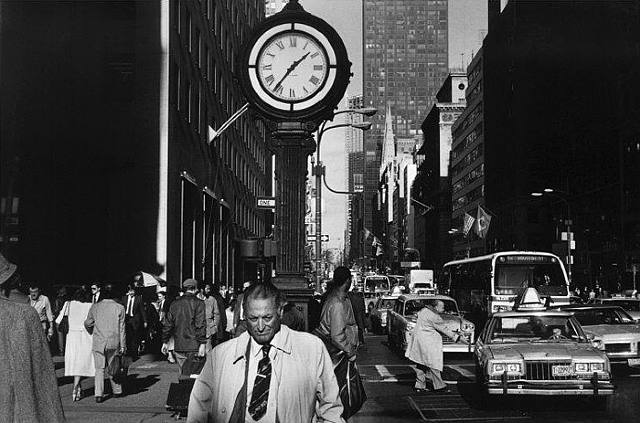
"Notes from the New Jersey screening of Zero: "Before embarking on a European tour, the Manila-based chamber pop supergroup Vigo, named after and subsequently haunted by the filmmaker, recorded three songs and issued an onus to all independent and underground filmmakers inclined to make music videos from them, as opposed to for them. The idea was for each piece to exist independently from the song as a singular work, the only caveat being that the song should its grist and be part of it. Fair enough. Roughly about a dozen videos were made. The elements that make up Zero were shot during the same two-day period of shooting the video I made. Of the three songs, I picked the ballad The Last Commandment, but rather than use it here as well, I used one specific element of it, making it in effect like a shadow of the original work, but one meant to have autonomy from it. Whenever I’m asked what Zero is exactly, I tell them it’s a ghost story. Also, a love story. And how they really are the same thing."
with Carmina Cruz and Ligaya Leccio
music by Khavn de la Cruz and Vigo; director of photography Allan C. Balberona; produced and written and edited by Dodo Dayao"
"I liked the poetic sensibility of Man with a Cheap Camera, a movie really about nothing
- Jonas Mekas (Filmmaker; Jury: dotfest online short film festival)
My very first work. Shot entirely using a china-made mp4 player with a 3gp camera, explains the quality of the picture, it's from a months load of footages. I made the music with a guitar that is one string short and recorded with a headset microphone. Really crappy film-making, but it's one of my most acclaimed work so far. And I think it's just ok to say that I'm really proud of this work.
everything by me.
selected at the dotfest Online Film Festival - Experimental Category (dotfest.net/film_list?cat_id=29)"
The Island (Fred. L'Epee, Switzerland/Greece, 2011) - 5'00''
****
DESCRIPTION
[from his vimeo]
"Form:
A - Distance
B - Memory
C - Exile
The distance is a perpetual geometry wich controlling our way of life and perception of our cogitation.
In response, we create the movement.
Through this movement, we use the memory into our psycho- affective system in the purpose to imagine our freedom, our cries, our drifts, our social struggles, our exile.
In exile, all we are.
We belong to this path. And we use it as an ultimate form of being. The Ideal is definitely established.
"this is another page in my research journal for project title: Lesser#3.
it does not contain conventional artistic and commercial distribution value.
it is produced merely for the expression & eventual annihilation of the self.
please forgive our trespassing of the worldly dogmas & possessions which, with all respect, some of us hold onto so dearly.
the montage engineers wish to thank all the brothers & sisters of humanity who have contributed directly and/or indirectly to the evolution of the images and sounds in this video.
borrowing the ideas from 1000 plateaus (Deleuze & Guattari), we like to say that in lesser#3 meditations, there is no beginning and ending, just becoming...
omg, i'm sounding so seriously already. where's the joker when u need one? my thoughts are flowing again, meditation number four coming soon. hehe.."
Les Astronautes (Chris Marker and Walerian Borowczyk, 1959)
**** The Avant-Garde
Within a set of historical circumstances, cinema, an ever-capital-intensive, production-dependent art form, has been continually evolving ever since. Commercial cinema has taken a Taylor-Fordist route in producing films whereby films as mass produced following a standardized code of instructions. Like an industrial factory, each role in the process of film making is bounded tightly by his functions. This mode of production brought the exapansion of Hollywood cinema in the 30s and 40s. This also provided the stability of many Asian cinemas like Japan, India and Philippines in the 50s and 60s. This rigidity in structure has standardized the aesthetics of commercial cinema to be mass-oriented and perceptually easy to understand. This has become the norm of cinema since its inception.
Avant-garde cinema works opposite to the 'Taylor-Fordist model of rationalized production'. In avant-garde, the route of production comes from the framework that cinema is an art form and therefore follows the mutability of art to produce contiguous, non-normative forms. There is less alienation in the mode of productions, often leading to less defined roles and functions. Avant-garde should not be confused with the general independently produced films, but it is a sub-class of independently produced films without funding and financing from the commercial studios. Whereas most independently produced films may have commercial appeal as most American independents today appears have, avant-garde films have no commercial qualities. They are devoid of lavishness, grandiosity and dependency to the star system of the commercial cinema. They are anti-thesis of commercial films in terms of economic power.
Avant-garde films centers on experimentation and creation of new form and styles. Avant-garde films non-conformity to the commercial cinema aesthetics aid them to explore the possibilities of film language continuum making them innovators of expression and approaches to film making. This tradition pushes the envelop of film making which precipitates to the normative language of commercial cinema. Perhaps this transfer and influence of ideas to commercial cinema and other areas of cinema makes avant-garde cinema an indispensable part of cinema.
Without the avant-garde, cinema will not push forward.
****
The Project
from Diary of a Pregnant Woman
(L'opéra-mouffe, Agnes Varda, 1958)
The project focuses on the exhibition of lesser known works of a new type of avant-garde: the avant-garde based on the current technology we have - the internet. Distribution of avant-garde has become easy with today's technology. With more and more works produced every year uploaded in VIMEO and YouTube, a new revolution is taking place. What strikes this new phase in avant-garde cinema is that most of its filmmakers are not institutionally recognized nor their works were mostly publicly exhibited in film festival. This new voices produce extremely personal films chronicling mostly their lives and the everyday. This path to cinema can be traced to the grass-roots of cinema. It was 1895 when Lumiere brothers started capturing the everyday and branded these recordings as movies. Devoid of automatize and invented movement, the Lumiere captured the look of the everyday: an arrival of a train, workers walking out of a factory and occasional banters of a gardener with a garden hose. Opposite to this was the wonders of George Melies in his experiments with the 'magic' of images. Melies created his own images and modified this images to create an illusion. Like Lumiere brothers and Melies, avant-garde filmmakers today are immersed in documenting the mundane aura of the everyday (Lumiere) but are drawn to experimentation (Melies).
For the next few months, AUDITOIRE will be exhibiting a series of films by avant-garde filmmakers. I hope you get to see them one by one and experience each.
Is there such a word to describe Drux Flux? I'll say this firmly: unfortunately, there is none.
Such animations like this almost attempt to discredit the definition of animation language: that the language assumes a representation of something. It seeks to break away from this definition and isolate itself from the wholeness of animation theory, into a fractured depiction of a new universe. If animation theory might help us with other types of animation such as cell animation, an approximate to live-action features, and marionette animation, a close to theatre art, there is a possibility that Drux Flux does need its brevity and thoroughness to exist.
Drux Flux resists this genre-enclosed categorical limitations and forms a new language, a new visual semiotic in serious fashion. To answer the question, why is Drux Flux so different from Spirited Away (2001) and Tardi drawing entails a careful remark of what form it assumes. This inquiry is filled with bearings: As to what style it is accustomed? How much accountable images can we draw? Is it still a form of animation or documentary?
After watching Drux Flux the second time around, i formed some intense thoughts:
Post-Modernism and Avant-Gardism
Two compatible fields of thought, two modern trends in art which can elucidate and decipher the richness of the animation in Drux Flux. Post-modernism is such a high word to describe a piece of art, and it must entail a certain care and vigilance when using it One thing about post-modernism that strives to be defined: 'intertexuality'. Intertexuality it can be seen as a thought that rejects the existence of a 'grand all-encompassing idea' (technically called meta-narratives) to explain truths, to acknowledge a point and to support reason. Jean-Francois Lyotard propose intertexuality and recognize the importance of local narratives. This local narratives are not only broken down but significantly dependent on each other.
This skepticism on the 'universalised' ideals is connected to the rise of the Avant-Garde movement in cinema some decades ago. Avant-Garde is a group skeptical with the mainstream culture and arts. They form new types of art through experimentation and usually innovative efforts. They are the 'extremists' of arts that denies the norms and pushes the limits of their creativity to new heights. Postmodernism may have fueled this sudden rise in avant-garde films.
Drux Flux works this way. It is an animation of a postmodern thought. Notice how equivalent the drawings of the 'mechanical man', which will comprise a part of our discussion on the later part of the text, to the anatomy drawings of Leonardo Da Vinci. It exists with reference to other 'texts.' The usage of photographed buildings and other derivative works such as cardboard arts and grafitti denotes DRUX FLUX's supreme dependence on them. If the animator takes away the photographs, the Da Vinci-like drawings, the cardboard images, Drux Flux cannot function as a whole. It needs the presence of these elements, hence it defineds its 'truthfulness' as text through the use of other texts. It carries a title, therfore, a Postmodern animation.
Aside from its usage of other texts to define its exclusivity as an art form,it attempts to dislodge itself from the current trends using a bizarre visual and graphic almost a structureless expositions. it molds a peculiar style of animation, highly contestable and rarely manifested in mainstream domains. It is the product of series of experimentation with photography and cell animation, hence a form of Avant-Garde animation. But this is clearly not the first one to attempt such style. The overlapping of images, and eccentric graphic approach rather than filmic has been a standard for avant-garde animation artists since the 1920s.
Mambéty'sThe Little Girl Who Sold the Sun exudes a familiar humanism with resemblance to the works of Iranian directors Abbas Kiarostami and Mohsen Makhmalbaf. The Little Girl has a similar humor and cadence with Kiarostami's children films like Where is my Friend's Home (1987) and The Bread and Alley (1970). It unveils a staggering view of the Senegalese way of life. The film is about the courage of young, handicapped girl named Sali. She sells Senegal government's newspaper Le Soleil, a job usually done by boys. She embodies a strong feminine presence and approaches life's problems with astuteness and maturity. She provides clarity and hope for the muddled life of the characters. You can watch the whole film below. It's only 45 minutes.
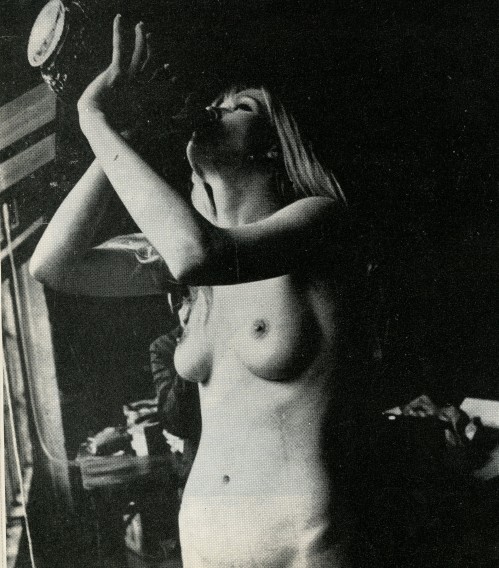
San Francisco(1965): The lady phantom of San Francisco.
Adrian here:
I better write something random for my readers, so I am enjoying my tea right now while writing this. Chris and I have been talking about films in general and the richness of the Third cinema, and how it can relate to the current resurgence of films in the Philippines. I somehow developed this digression on the recurring hypothesis that the Third Cinema is highly connected to the avant-garde movement. The avant-garde, fueled by artistic motivation and copious re-imagination of forms and patterns, is one of the most underrated forms of cinema in the world. Most of the films lack narrative drive and are often disorienting and surreal. The movement aims to restore the basic origins of cinema by establishing new perceptual relationships from its basic forms. Like in Anthony Stern's San Francisco, in a span of 15 minutes, we are visually immersed into the city of San Francisco. With quick paced editing and frantic images, it shows a San Francisco with pulse. A multi-colored, breathtaking display of events, it is paused at times to emphasize structures and figures traced by light.
Asimple and poetic film about the falling of rain in a city. It is one of the city symphonies that I love the most. It's tender and sweet, and I love its pacing. It is edited without the intent of distortion, just a recording of the events surrounding the falling of rain. I have yet to see more of Joris Ivens.
Shaving the Tree, I mean, the Bush of Life at Christophe Honore's
Homme Au Bain (2010): No pun intended
If you are, by chance, trolling at some movie forums at the crack of dawn, or making some obscure watch-all-this-and-be-hysterical-in-floral-dress list at MUBI.com, stop for awhile. Just stop. Look at the sky. Back to your computer and back to the sky. And you'll figure out that these films I've written below with their corresponding links to their full and complete versions, are unknown to many. You think you're a self-proclaimed film buff and you know every inch of cinema from around the world, from every genre, every experimental bent, underground or otherwise. Think again big boy! You're not very far from the mainstream arthouse. Are you tired of canons like:
Well, if you think you're fed up with Cannes, Berlin, and Venice, this list might re-surged you back to life. Well, not life as in 'life' exactly, but the life on the other side of cinema, the cinema of the unknown. But please don't ever think of using these films to push your hipster-self to your peers by saying: "What!? You haven't watched Noite Vazia? Are you crazy? That's the most fucking awesome film I've ever seen!" And believe me, using these films as conversation openers with your cinephile friends wouldn't work either.
Enjoy big boy!
1 | A Sixth Part of the World | 1926 | dir. Dziga Vertov | 65 min | [watch now]
2 | Island of Flowers | 1989 | dir. Jorge Furtado | 13 min | [watch now]
3 | Noite Vazia | Eros... The Bizarre | 1964 | dir. Walter Hugo Khouri | 93 min | [watch now]
4 | Very Nice, Very Nice | 1961 | dir. Arthur Lipsett | 7 min | [watch now]
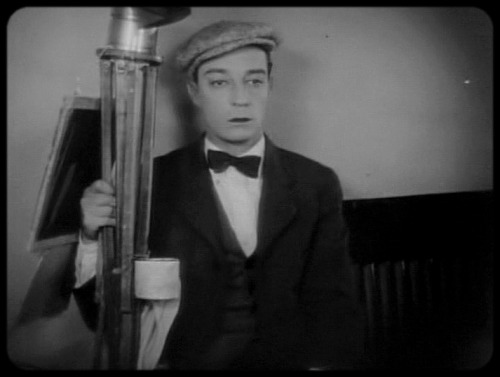
5 | The Cameraman | 1928 | dir. Buster Keaton | 67 min | [watch now]
6 | Anamnesis | 1969 | dir. Frans Zwartjes | 16 min | [watch now]
7 | Le Femme Qui Se Poudre | The Woman Who Powders Herself | 1972 | dir. Patrick Bokanowski| 16 min | [watch now]
8 | Mababangong Bangungot | Perfumed Nightmares | 1977 | dir. Kidlat Tahimik| 93 min | [watch now]
9 | Reconstituirea | Reconstruction | 1968 | dir. Lucien Pintilie | 100 min | [watch now]
10 | Bontoc Eulogy | 1995 | dir. Marlon Fuentes | 56 min | [watch now]
11 | 21-87 | 1963 | dir. Arthur Lipsett | 9 min | [watch now]
12 | ...A Valparaiso | 1962 | dir. Joris Ivens | 27 min | [watch now]
13 | The Song of Ceylon | 1934 | dir. Basil Wright | 38 min | [watch now]
14 | Traité de bave et d'éternité | Venom and Eternity | 1951 | Isodore Isou | 120 min | [watch now]
15 | Faat Kiné | 2000 | Ousmane Sembène | 120 min | [watch now] 16 | Mirt Sost Shi Ami | Harvest: 3000 Years | 1976 | Haile Geriman | 137 min | [watch now]
17 | Mujo | This Transient Life | 1970 | Akio Jissoji | 1970 | 143 min | [watch now]
18 | Klassenverhältnisse | Class Relations | 1984 | Danièle Huillet, Jean-Marie Straub | 126 min | [watch now]
19 | Tabiate bijan| Still Life | 1974 | Sohrab Shahid Saless | 93 min | [watch now]
P.S. Has anyone watch a film about Atlantis in the 1910s? Reply with links or be dead!