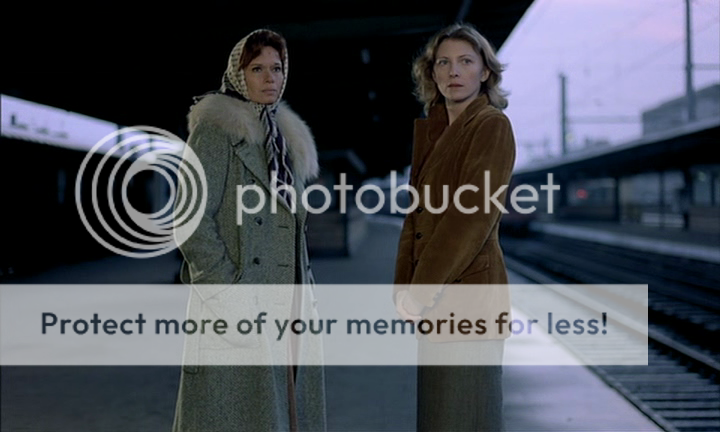
Les Rendez-vous d'Anna (1978): The vacuous spaces that stretches its parametrized world.
In the spatial unity of Les Rendez-vous d'Anna (1978), I was grasping and searching for my own utility as a film viewer. This is a challenging film wherein its depths are kept between glances, between the movement of bodies and the frames' stillness. Chantal Akerman's minimalist gem Jeanne Dielman, 23 Quai du Commerce, 1080 Bruxelles (1975). This is because in Les Rendez-vous d'Anna has an exacting cross-hairs of exploring the relationship between space and the main character's resonating emotional vacuity. Crossing within the threshold of perceptual experience, I encounter numerous instances in the film wherein the Anna is placed with comparison to empty spaces. This is a bit more functional and more purposeful than what she did in Jeanne Dielman. This is a notable improvement from the solidified position of Jeanne in her 1975 film. The spaces to which Anna move as if in solitary trance are narrative elements themselves, as if these spaces are characters in the story. It is as if these vacuous spaces communicate with the viewers, narrating meditatively the alienation of Anna in her journey home.


I find it an experiential movie, a movie that immerses the viewers into the quietness of its form. Unlike other films which tends to be manipulative, and to some degree, lording their forms and styles to the viewers as if they were a spectacle, this kind of films have an absorbing humility and incredible reticence to exaggerate. Is it closer to realism? Or is it realism itself? Or another form of realism? The minimalist stylistic function of the form to relate character's thoughts to its surroundings have been used with great mastery of today's filmmakers notably Lav Diaz's epic-long films like Death in the Land of Encantos (2007) and Heremias I (2006) and Nuri Bilge Ceylan's Uzak (2002). Some filmmakers like Lisandro Alonso approaches this minimalism with striking simplicity that his films takes more abstract, self-reflexive and radical forms like his La Libertad (2001). These films have intense political issues raging from labor issues, poverty to territorial aesthetics and even conflicts in aesthetics and polemics of cinema itself. These are intensely dredged into structure of the mise-en-scene and the placing and pacing of the shots. They encapsulate the characters or other narrative elements into a richly layered film. In Les Rendez-vous d'Anna, the feminist ideology, the evocation of Anna's struggle with alienation as a woman being trapped in her strong feminist figure, hinges upon a sort of personal geopolitics wherein her own self is projected to her personal space. It is as if her encounters with these passing figures provide issues about the personal and public space of women, how a woman must manifest herself in a film. Minimalism has somewhat soften the intrusion of the camera to its subject matter, like what Akerman did in Jeanne Dielman. Akerman achieves mastery in frame composition by positioning the camera with a certain distance from its subjects --- a certain characteristic quality for every Akerman film. It brings me to a conclusion that thematic elements can be effectively depicted by positioning the camera rightfully from the subject.
The method of draws many implications about the politics of a contemplative image. Questions like is Les Rendez-vous d'Anna an experiential film, only appealing to the senses arises. Or does is have its own polemics not only limited to the experiential? Unlike Lisandro Alonso's film La Libertad (2001) which commences from the banality of daily life, Les Rendez-vous d'Anna comes from a feminist school of thought. Its politics about liberation and alienation of women is not new. Akerman approach this theme with restraint and arrive at startling, enigmatic results which, a friend observes, closer to the truth.
Only a few filmmakers have master the craft of contemplative filmmaking. It is, of course, too limited to think that contemplative cinema exist because of its aesthetics: the long takes, the immovable camera, the emphasis on singularity, alienating shots and still objects, blank spaces and linear editing. Great contemplative films have its own polemics, and yes, they can move the camera and inject short shots in compliment to the long shots. Lav Diaz and Chantal Akerman follows this model. Not far behind are Tsai Ming-Liang and Lisandron Alonso.
Les Rendez-vous d'Anna (1978): The assimilation of a minimalist style in the mise-en-scene.
I find it an experiential movie, a movie that immerses the viewers into the quietness of its form. Unlike other films which tends to be manipulative, and to some degree, lording their forms and styles to the viewers as if they were a spectacle, this kind of films have an absorbing humility and incredible reticence to exaggerate. Is it closer to realism? Or is it realism itself? Or another form of realism? The minimalist stylistic function of the form to relate character's thoughts to its surroundings have been used with great mastery of today's filmmakers notably Lav Diaz's epic-long films like Death in the Land of Encantos (2007) and Heremias I (2006) and Nuri Bilge Ceylan's Uzak (2002). Some filmmakers like Lisandro Alonso approaches this minimalism with striking simplicity that his films takes more abstract, self-reflexive and radical forms like his La Libertad (2001). These films have intense political issues raging from labor issues, poverty to territorial aesthetics and even conflicts in aesthetics and polemics of cinema itself. These are intensely dredged into structure of the mise-en-scene and the placing and pacing of the shots. They encapsulate the characters or other narrative elements into a richly layered film. In Les Rendez-vous d'Anna, the feminist ideology, the evocation of Anna's struggle with alienation as a woman being trapped in her strong feminist figure, hinges upon a sort of personal geopolitics wherein her own self is projected to her personal space. It is as if her encounters with these passing figures provide issues about the personal and public space of women, how a woman must manifest herself in a film. Minimalism has somewhat soften the intrusion of the camera to its subject matter, like what Akerman did in Jeanne Dielman. Akerman achieves mastery in frame composition by positioning the camera with a certain distance from its subjects --- a certain characteristic quality for every Akerman film. It brings me to a conclusion that thematic elements can be effectively depicted by positioning the camera rightfully from the subject.
The method of draws many implications about the politics of a contemplative image. Questions like is Les Rendez-vous d'Anna an experiential film, only appealing to the senses arises. Or does is have its own polemics not only limited to the experiential? Unlike Lisandro Alonso's film La Libertad (2001) which commences from the banality of daily life, Les Rendez-vous d'Anna comes from a feminist school of thought. Its politics about liberation and alienation of women is not new. Akerman approach this theme with restraint and arrive at startling, enigmatic results which, a friend observes, closer to the truth.
Only a few filmmakers have master the craft of contemplative filmmaking. It is, of course, too limited to think that contemplative cinema exist because of its aesthetics: the long takes, the immovable camera, the emphasis on singularity, alienating shots and still objects, blank spaces and linear editing. Great contemplative films have its own polemics, and yes, they can move the camera and inject short shots in compliment to the long shots. Lav Diaz and Chantal Akerman follows this model. Not far behind are Tsai Ming-Liang and Lisandron Alonso.

Ciao!
****